REVIEW · GLASGOW
Glasgow’s Music Mile Walking Tour
Book on Viator →Operated by Glasgow Music City Tours · Bookable on Viator
Glasgow sings when you follow the venues. This Music Mile walking tour is a fast, rewarding route that links Glasgow’s big-name stages to the bands that played them, with a music-journalist style guide (Fiona is a standout example) and time to take in the stairs-and-incline reality of the route. I also like that it’s not just plaques and photos; it has storytelling that lands at the places people actually remember, especially the stop at Nice ’n’ Sleazy.
You start at the Glasgow Royal Concert Hall at 2:00 pm and finish at King Tut’s Wah Wah Hut in about two hours, with five stops and free entry at each one. The group size is capped at 26, so it stays friendly, and the tour can work for a lot of music tastes, from classic rock to New Wave to later indie and punk-adjacent favorites.
In This Review
- Key Points to Know Before You Go
- Where Glasgow’s Music Mile Starts and How to Walk It
- Price and Value: Why $27.06 Is About the Storytelling
- Stop 1: Glasgow Royal Concert Hall and the Empire-Era Crowd
- Stop 2: Pavilion Theatre, Film Glamour, and Early Rock Stages
- Stop 3: Royal Conservatoire of Scotland and the Surprise Connections
- Stop 4: Nice ’n’ Sleazy, Sauchiehall Street, and the Scene You Can Still Feel
- Stop 5: King Tut’s Wah Wah Hut and the Bands That Started Small
- The Guides: How Fiona and Felipe Make It Feel Personal
- What I’d Bring (and What to Wear) for the Best Experience
- Who This Walking Tour Is For (and Who Might Skip)
- Should You Book the Glasgow Music Mile Walking Tour?
- FAQ
- How long is the Glasgow’s Music Mile Walking Tour?
- What does the tour cost?
- Where does the tour start and end?
- What time does the tour begin?
- Is the tour offered in English?
- Is admission included for the stops?
- Does the tour include food and drinks?
- What is the minimum age?
- Is it accessible for mobility issues?
- Can I cancel for free?
Key Points to Know Before You Go
- A small group (max 26) keeps questions and stories in the open
- Music-journalist guides like Fiona bring decade-by-decade scene detail
- Nice ’n’ Sleazy stop gives you a real pause in a working venue (you can buy a refreshment)
- King Tut’s access may go beyond the street, depending on what’s possible that day
- Free admission at every main stop means your $27.06 goes to the guide, not tickets
- Steep inclines and stairs make comfy shoes non-negotiable
Where Glasgow’s Music Mile Starts and How to Walk It
This tour runs for about 2 hours and starts at 2:00 pm at Glasgow Royal Concert Hall, 2 Killermont St, Glasgow G2 3NW. You end at King Tut’s Wah Wah Hut, 272A St Vincent St, Glasgow G2 5RL, so you’re finishing near another music landmark instead of backtracking.
You’ll want comfortable shoes. The route includes steep inclines and stairs, which matters because the stops are timed and the walk is part of the experience. If you have mobility concerns, the tour says you should contact the local supplier to discuss what can be accommodated.
It’s also set up for real-world touring: you get a mobile ticket, confirmation comes at booking, and it’s near public transportation. Service animals are allowed, and the minimum age is 14 due to licensing laws.
Other Glasgow city walking tours we've reviewed in Glasgow



Price and Value: Why $27.06 Is About the Storytelling
At $27.06 per person, this isn’t a money-saver in the sense of being free to enjoy Glasgow on your own. But it does feel like a good value because you’re paying for a focused guided walk that hits several major music venues in one go.
Here’s what makes the price feel fair:
- Each main stop is listed as free admission, so you’re not juggling extra ticket costs.
- The guide is the core of the tour, and the stops are short enough to keep things moving without feeling rushed.
- You get a mix of big institutions and working music spaces, which is harder to plan solo.
In plain terms, you’re buying context. When you stand in front of a venue, a guide can explain what kind of crowd it drew, what it symbolized at the time, and why Glasgow’s music culture developed the way it did.
Stop 1: Glasgow Royal Concert Hall and the Empire-Era Crowd
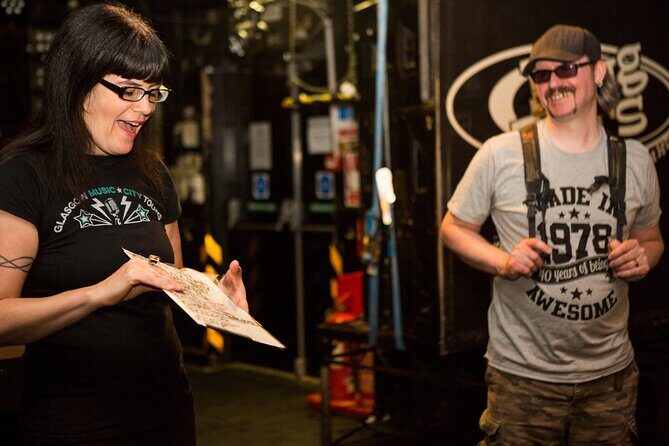
Your first stop is The Glasgow Royal Concert Hall, home to the Royal Scottish National Orchestra and the host of Celtic Connections, described here as the world’s biggest winter music festival. Even if you’re not catching a performance, the building anchors the story of how serious music and popular music share the same city stage.
The tour’s angle here is about changing audiences and reputation. You’ll hear tales that connect the area’s music-life to an Empire-era neighbor. The Empire may be gone, but the idea that the UK had a crowd known for being unusually critical and passionate still shows up in the way the guide frames Glasgow’s musical personality.
You’ll typically spend about 15 minutes here. The stop is timed, which helps you get the key story without turning the tour into a museum-style lecture.
Stop 2: Pavilion Theatre, Film Glamour, and Early Rock Stages
Next you head to The Pavilion Theatre (about 10 minutes). This is one of those stops where you start to see how music scenes borrow from entertainment in general.
The Pavilion’s past connections are the point. It has hosted big names like Houdini and Charlie Chaplin, plus Sydney Devine, noted as Glasgow’s very own rhinestone cowboy. That range matters because it shows how venues in Glasgow weren’t locked into one genre. They were stages where performance culture lived.
You’ll also get a nod to the former Odeon, which is described as a cinema first and foremost, but also a place where bands like The Beatles, Little Richard, and The Rolling Stones played. That kind of cross-over is exactly what a good music tour can do: it helps you understand how early rock spread through places already built for mass audiences.
Again, the entry is listed as free, and the stop is short enough that you’re ready for the next shift in tone.
Stop 3: Royal Conservatoire of Scotland and the Surprise Connections
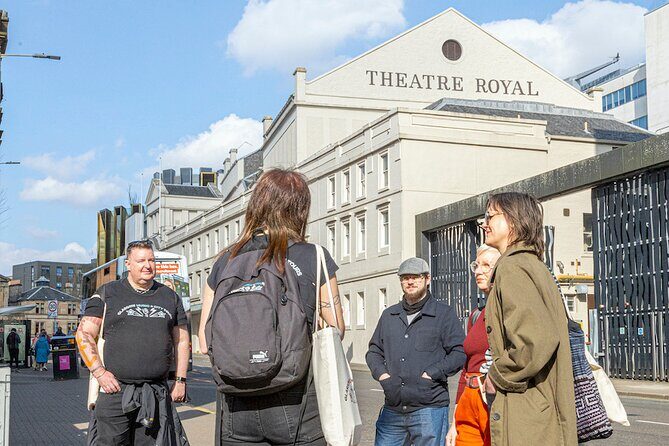
At the Royal Conservatoire of Scotland, the guide turns the spotlight on the performers and creators who pass through that orbit. You’ll typically spend about 10 minutes at this stop, and the stories are meant to feel surprising without being random.
The tour includes references to the kind of creative world the Conservatoire touches, with mentions of associated hobbits, Outlander stars, Dr Who actors, and even Bob Dylan being connected in an unexpected way through bagpipes. Whether you’re a pop-culture fan or just like when tours make connections you didn’t know were possible, this stop does a good job of widening the lens.
This isn’t the moment to expect a long explanation. It’s more like a quick, smart “here’s why this matters” that keeps your brain awake for the rest of the walk.
Other Merchant City and music tours we've reviewed in Glasgow



Stop 4: Nice ’n’ Sleazy, Sauchiehall Street, and the Scene You Can Still Feel
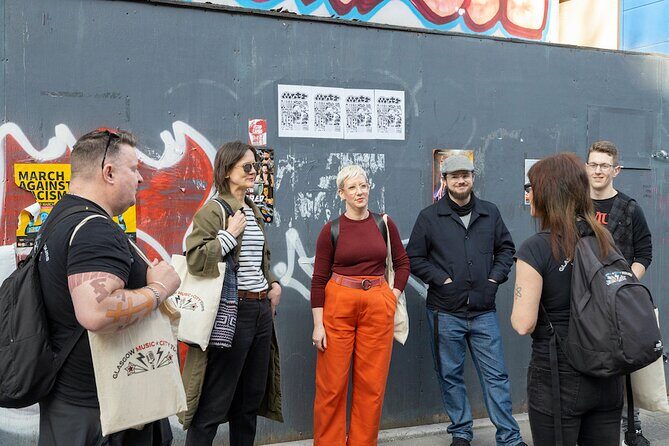
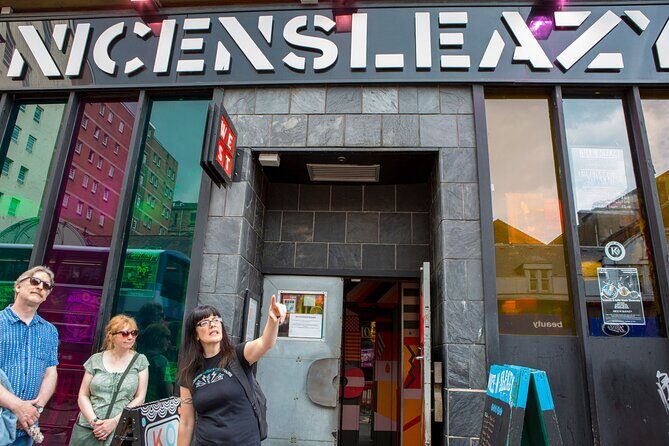
This is the stop that turns a walking tour into a real pause. Nice ’n’ Sleazy is described as a big-hearted dive bar that plays an instrumental role in nurturing young talent. The itinerary gives you about 20 minutes here, and it’s built so you can buy a refreshment if you want.
The best part is that it’s not treated like a detour. The tour pauses here to talk about the changing sound of Sauchiehall Street, described as the city’s night-time playground for decades. You’re standing in a place tied to that shift, so the stories land more firmly than they would if you only saw buildings from the outside.
This is also where the tour brings in a line from the past: the guide talks about rock ’n’ roll legends connected to the late Apollo. It’s the kind of stop that helps you understand Glasgow as a living music ecosystem, not just a list of famous names.
One nice bonus: you can slow down a bit here. Even if you keep moving for the full route, you’ll feel the tour lighten up during this pause.
Stop 5: King Tut’s Wah Wah Hut and the Bands That Started Small
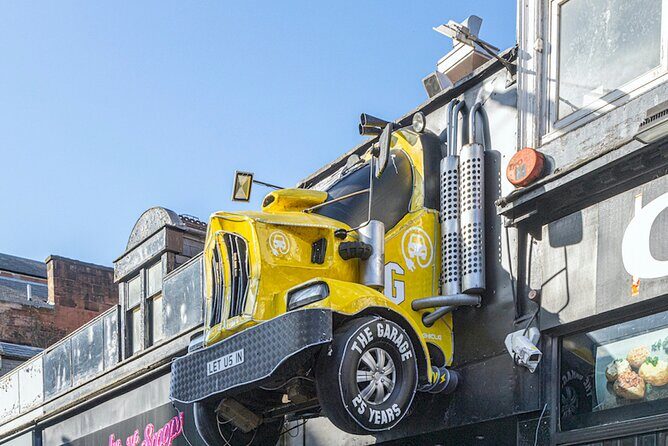
Your final stop is King Tut’s Wah Wah Hut for about 15 minutes. This is where the tour gets very “music-nerd in the best way.”
You’ll follow in the early footsteps of bands like Oasis, Blur, and Manic Street Preachers. The point isn’t that these bands had one exact trajectory, but that this venue sits in the real path where famous acts were once becoming famous.
Access can vary, but the tour notes that depending on what’s possible, you might be able to stand under the lights and grab a selfie on the stage that helped launch so many great acts. In some cases, it may also mean you get more inside access than you’d expect from a standard stop-by-and-look tour, so it’s worth keeping your camera ready and your patience calm.
Either way, ending here works because King Tut’s still feels like a working venue, not a music-themed stop you’ve already outgrown.
The Guides: How Fiona and Felipe Make It Feel Personal
What makes this tour special is the guidance. You’re not just being walked from one stop to the next—you’re hearing how a guide thinks about music as a city habit.
One example: Fiona, described as a music journalist for 30 years, is the kind of guide who can bring both big acts and the little scene details into the same conversation. The tour style around her is also gentle. It stays easy to follow, even if your music knowledge is mostly anchored to one era.
Another example: Felipe is called out for knowing a lot of music history related to Glasgow. That matters because the Music Mile route works only if the guide can connect the dots between venues and the sounds associated with them.
Also, the tour format creates room for the group to participate. You might find yourself sharing the sidewalk with older music fans who can place themselves in the scene from the 70s, 80s, and 90s, and the guide makes space for those stories. It turns the tour from a one-way lecture into a conversation with Glasgow as the common topic.
What I’d Bring (and What to Wear) for the Best Experience
This is a walking tour, so your comfort choices affect the quality of the day.
- Wear comfortable shoes, because the route includes stairs and steep inclines.
- Dress for the weather. It’s Glasgow, so plan for changes and bring weather-appropriate layers.
- If you want photos at King Tut’s, have your phone charged and your camera grip ready before you reach the final stop.
If you’re traveling with someone who’s less into music history, the Nice ’n’ Sleazy pause and the variety of venues can still make it engaging, since performance culture is the theme running through all stops.
Who This Walking Tour Is For (and Who Might Skip)
This tour fits best if you like any of these:
- You enjoy music history that’s tied to actual places.
- You want a quick route that covers multiple key venues in about two hours.
- You like the idea of hearing how Glasgow’s sound changed over time, not just hearing band names.
It’s especially appealing to fans of scenes like New Wave and guitar-driven rock, and it’s also a good match for people who enjoy storytelling from people who’ve followed music for decades.
Who might want another plan: anyone who can’t manage stairs and steep inclines. The tour does say you should contact the supplier about mobility issues, but the route constraints are real.
Also, if you’re under 14, licensing rules mean this one won’t be your fit.
Should You Book the Glasgow Music Mile Walking Tour?
Yes, if you want a high-impact, low-time way to understand Glasgow’s music scene. For the money, the strongest value is the mix of major venues plus a working club stop, all wrapped in a short, guided route that keeps moving.
Book it sooner rather than later. The tour notes it’s often reserved about 29 days in advance on average, which suggests people do plan ahead for the afternoon timing. With a maximum group size of 26, you don’t want to gamble on availability if your dates are tight.
Skip it only if walking uphill and stairs is a hard no for you, or if you prefer to explore music stops at your own pace without a guide weaving stories between locations.
FAQ
How long is the Glasgow’s Music Mile Walking Tour?
It runs for about 2 hours.
What does the tour cost?
The price is $27.06 per person.
Where does the tour start and end?
It starts at Glasgow Royal Concert Hall, 2 Killermont St, Glasgow G2 3NW, UK, and ends at King Tut’s Wah Wah Hut, 272A St Vincent St, Glasgow G2 5RL, UK.
What time does the tour begin?
The start time listed is 2:00 pm.
Is the tour offered in English?
Yes, it’s offered in English.
Is admission included for the stops?
The itinerary lists each main stop as free admission.
Does the tour include food and drinks?
No. Food and drinks are not included, though you may have an opportunity to buy a refreshment at Nice ’n’ Sleazy.
What is the minimum age?
The minimum age is 14 due to licensing laws.
Is it accessible for mobility issues?
The route includes steep inclines and stairs. The tour suggests contacting the local supplier to discuss mobility issues before booking.
Can I cancel for free?
Yes, you can cancel up to 24 hours in advance for a full refund. If you cancel less than 24 hours before the start time, the amount paid won’t be refunded.