REVIEW · GLASGOW
Glasgow’s Music Mile Tour
Book on GetYourGuide →Operated by Glasgow Music City Tours · Bookable on GetYourGuide
One street. One city. Thousands of gigs. Glasgow’s Music Mile tour is an easy way to connect the dots between legendary venues and the scenes that made them famous, with stories that move from past to present in just 2 hours. I love how the route links big-name landmarks and gritty backroom stages without feeling like a museum tour, and I love the guide’s knack for turning song facts into vivid street-level anecdotes. One thing to consider: the Scottish accent can be tricky at times, so if you’re sensitive to accents, you may want to sit closer to your guide.
You’ll start by the Glasgow Royal Concert Hall and end at King Tut’s Wah Wah Hut, with stops built around the people, bands, and events that shaped Glasgow’s sound. I particularly liked the way the tour frames music as a living thing, from winter festivals like Celtic Connections to the next wave of guitar heroes. And yes, there’s even the chance for stage-style selfies at King Tut’s if access allows.
The drawback isn’t the walking. It’s the pacing. This is a whistle-stop city-center route, so if you want long stays at each venue or lots of photo time, you’ll need to treat it like a fast, guided orientation rather than a slow crawl.
In This Review
- Key things to know before you go
- Where the walk begins: Royal Concert Hall to the Glasgow Music Mile pulse
- The Apollo and Celtic Connections: why the tour starts with legacy
- Conservatoire and Glasgow School of Art: when music and art feed each other
- Centre for Contemporary Arts and Nice ’n’ Sleazy: genres on the same street
- From the myths to the stage: finishing at King Tut’s Wah Wah Hut
- Price and value for a 2-hour guided walk
- How the guide style affects your experience (and how to get the most out of it)
- Who this Music Mile tour suits best
- What to wear and bring for a comfortable 2 hours
- Should you book Glasgow’s Music Mile Tour?
- FAQ
- What is the duration of Glasgow’s Music Mile tour?
- Where do I meet for the tour?
- How much does the tour cost?
- Is the tour suitable for children?
- What’s included in the tour price?
- Are drinks included?
- What language is the tour in?
- Are there stairs during the tour?
- Can I pay later or reserve without paying today?
- Is free cancellation available?
Key things to know before you go
- Start at the Royal Concert Hall steps: your route officially kicks off right where Glasgow’s formal music culture shows itself.
- Apollo stories set the tone: you’ll hear tales tied to the venue and the era it helped define.
- Celtic Connections is a major stop: the tour explains how it grew into a big winter music festival.
- You’ll hit multiple styles on the same walk: from punk and pop to jazz and dancehall.
- Nice ’n’ Sleazy includes a refreshment break: you get a real pause without turning the tour into a pub crawl.
- King Tut’s ends the night-in-a-day: you finish at the place associated with Oasis, Blur, and the Manic Street Preachers.
Where the walk begins: Royal Concert Hall to the Glasgow Music Mile pulse
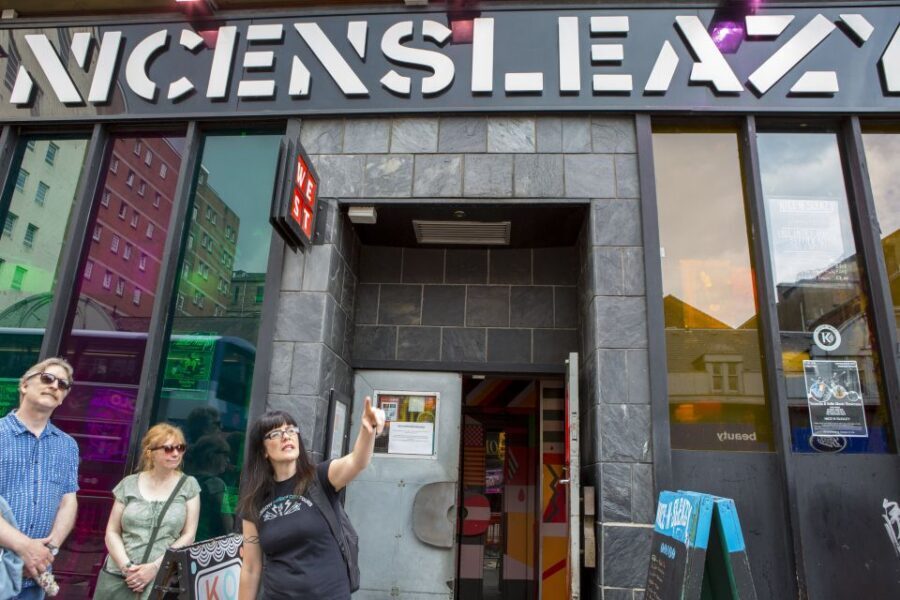
Meeting at the steps of the Sauchiehall Street entrance to the Glasgow Royal Concert Hall is a smart move. It’s central, it’s easy to find, and it gives you a quick visual contrast right away: big public concert space on one side, scrappier gig lore on the other. Your guide will be wearing a Glasgow Music City Tours T-shirt (black with the company logo), so it’s simple to spot the group and get going fast.
From the start, this tour feels like it’s built for momentum. The idea is that you don’t just hear names of bands and venues. You learn where they sit in the city, what kind of room they are, and why certain streets became meeting points for music scenes. If you’re short on time in Glasgow, that matters. Two hours is long enough to get meaningful context, but short enough that you’ll still have energy for dinner after.
Other Merchant City and music tours we've reviewed in Glasgow



The Apollo and Celtic Connections: why the tour starts with legacy
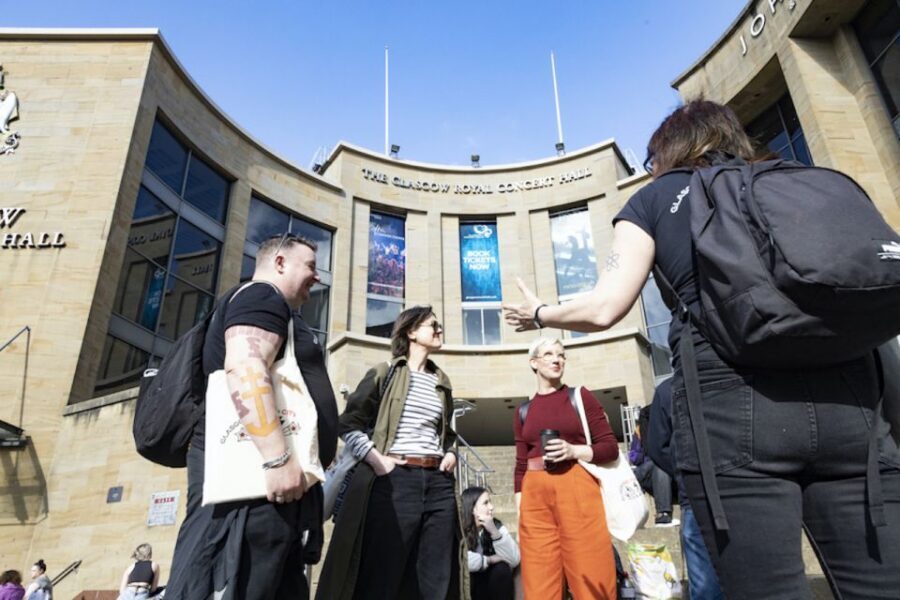
The first stretch is all about the Apollo and the world around it. Expect stories about the Apollo’s legendary rock gigs and the way that particular era still echoes around Glasgow’s music reputation. The Apollo segment isn’t just trivia. It helps you understand how a city builds momentum. A venue becomes a magnet. Bands come through. Local talent learns what a real crowd looks like. Suddenly you’re not just hearing about a building; you’re hearing about a system that created opportunities.
Then the tour pivots toward Celtic Connections, and that’s where things get interesting for anyone who thinks music tourism is only about classic rock or old photographs. You’ll learn how Celtic Connections became the biggest winter music festival in the world, and you’ll see why this matters to Glasgow’s identity beyond spring and summer touring seasons. Winter matters here. When the festival grew, it likely helped keep venues active and audiences engaged even when other cities slow down.
If you like festivals, programming, and how scenes keep themselves alive, this part is a highlight. It gives you a reason to think about Glasgow as a place that plans for music, not just a place that accidentally made history.
Conservatoire and Glasgow School of Art: when music and art feed each other
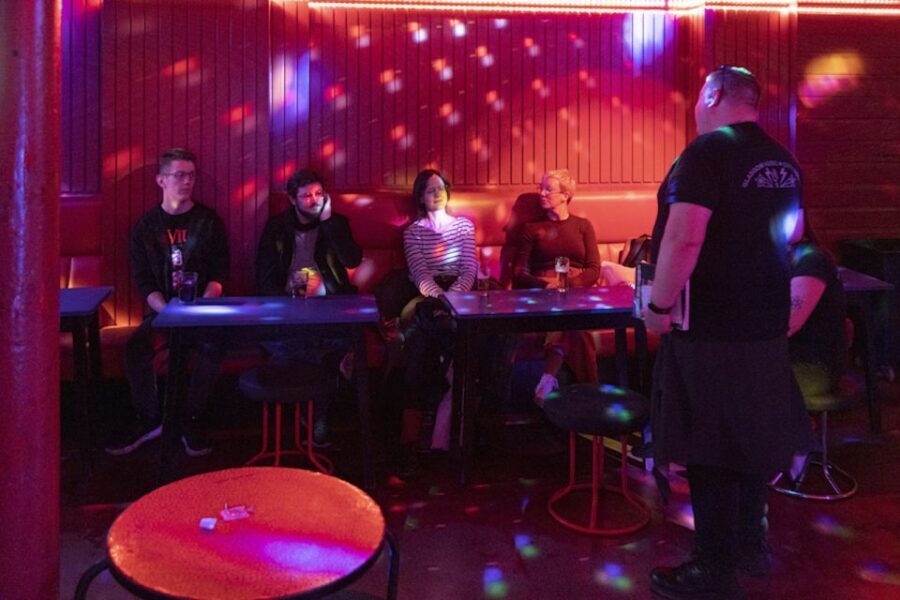
After the earlier legacy stops, the tour moves through the city’s educational and creative institutions, including the Conservatoire and Glasgow School of Art. Even if you don’t know much about the local arts system, this section helps you see why Glasgow’s music output isn’t only about venues. It’s also about people training, experimenting, and making connections.
Here’s what I think you’ll enjoy: the tour treats these places as part of the same story as the concert halls and backroom gigs. You’re not jumping randomly from one landmark to another. You’re learning the city’s pipeline. Students and artists show up. New bands form. New sounds get tested. That’s why the tour’s structure works. It’s not a list of stops; it’s a cause-and-effect walk.
You should also know there will be stairs and inclines along the way. The tour recommends flat, comfortable shoes and waterproof clothing. In practice, that means you’ll want to prioritize grip and comfort. You’ll likely be taking photos while moving, so anything that slows your pace, like slippery soles, will make the route less fun.
Centre for Contemporary Arts and Nice ’n’ Sleazy: genres on the same street

Next you’ll hit the Centre for Contemporary Arts and Nice ’n’ Sleazy, and this is where the tour gets broader in sound. The walk covers diverse genres and eras, from dancehall and traditional jazz to punk, pop, and today’s young guitar heroes. That variety is one of the tour’s strengths. Glasgow isn’t one genre. The city has always traded in multiple scenes at once, and the Music Mile tour mirrors that.
Nice ’n’ Sleazy includes a refreshment stop, which is a practical win. You get a pause without being forced to buy a full meal just to keep going. Also, a stop like this does something subtle: it keeps the tour grounded. The stories feel less like lectures and more like context you can absorb while your energy resets.
One thing to keep in mind: drinks or meals aren’t included. The tour includes the refreshment stop itself, but you’ll still need to pay for your own drink. That’s totally normal for a venue-based walking tour, and it also means you can choose what fits you, whether that’s tea, a soft drink, or something stronger.
From the myths to the stage: finishing at King Tut’s Wah Wah Hut
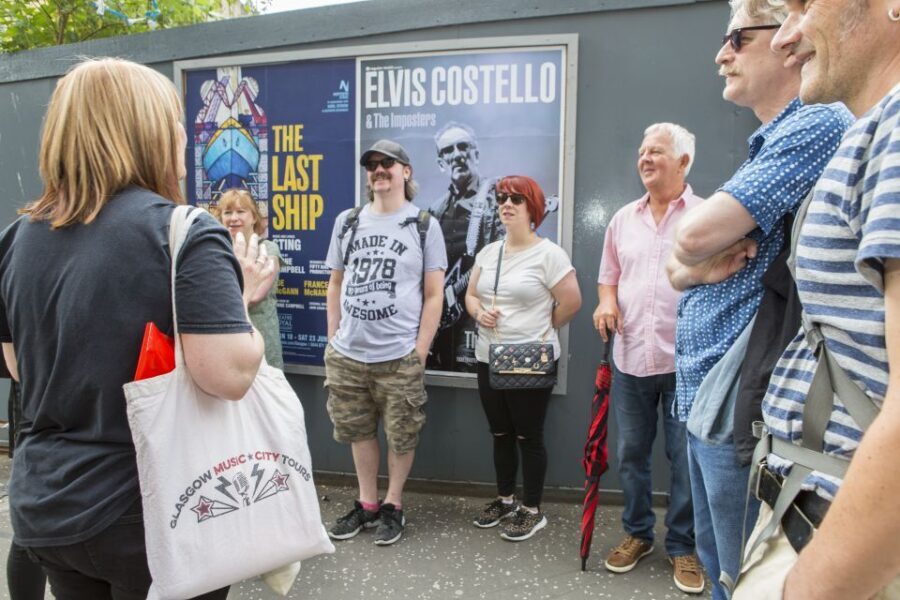
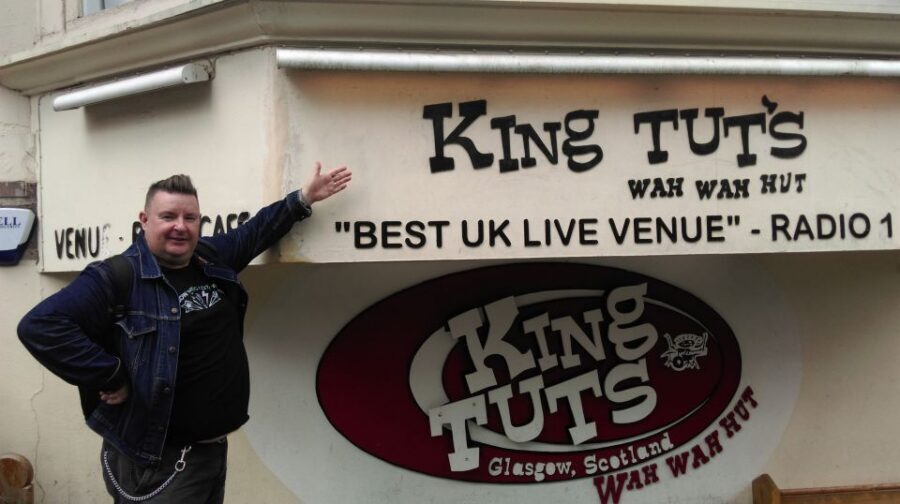
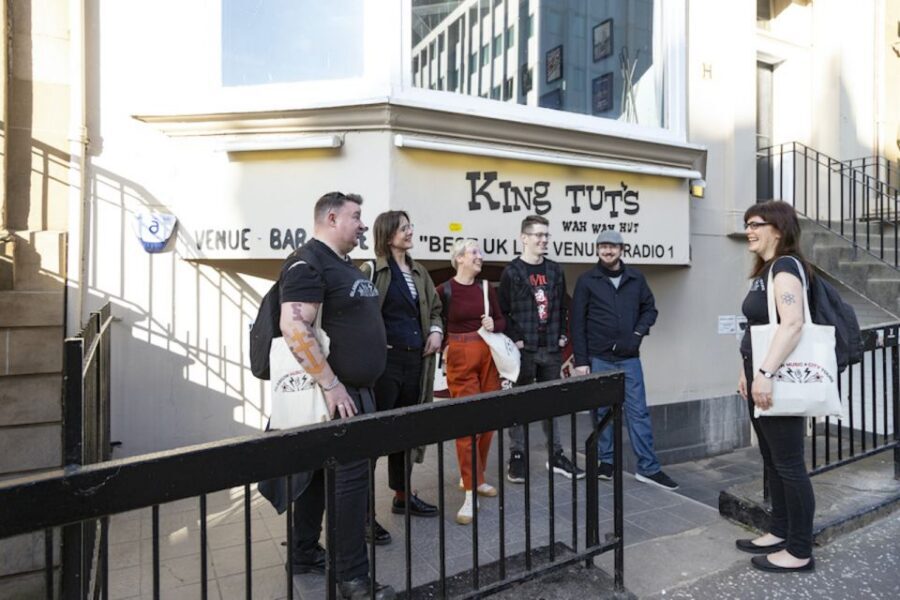
The tour’s grand finale is King Tut’s Wah Wah Hut, where you finish and where the atmosphere shifts from historical storytelling to real-world music momentum. This stop is designed for fans of modern British guitar music, because King Tut’s is tied to the early footsteps of Oasis, Blur, and the Manic Street Preachers.
What makes this a great way to end a tour is the built-in contrast. You’ve already heard about older legends like the Apollo, and you’ve learned how festivals and institutions keep music thriving. Now you’re at a venue that still feels like it belongs to the here-and-now. It’s the closing chapter that helps you understand why the tour’s “past and present” promise isn’t marketing fluff.
Depending on access, you may have the chance to stand under the lights and take selfies on the stage that helped launch so many great acts. That part is optional and access-based, so don’t treat it like a guaranteed photo-op. But even without stage time, reaching King Tut’s at the end of the walk gives you a clear sense of where Glasgow’s music stories continue.
If you’re a first-time visitor, this finish helps you leave with a mental map of the city’s musical geography. If you’re local, it can feel like a flashback that still has legs, because King Tut’s isn’t just a memory lane stop. It’s a working venue tied to new performers too.






Price and value for a 2-hour guided walk
At about $26 per person for a 2-hour guided tour, the value comes from focus. You’re paying for time-saved context and a route that connects venues into a story. You’re not trying to guess where to start or which buildings matter most. The guide’s job is to turn a scattered city-center set of locations into a coherent walk you can actually remember.
This price point also tends to favor smart travelers who want cultural value without spending most of the day on logistics. You’ll walk, listen, and take in landmarks at a pace that still leaves you free for other plans afterward. The refreshment stop in Nice ’n’ Sleazy is a bonus that makes the tour feel like an experience, not only a lecture.
One note: because drinks or meals aren’t included, your total spend can be a bit more depending on what you order at the break. Still, the structure makes it easier to budget than a long bar crawl.
How the guide style affects your experience (and how to get the most out of it)

Several reviews strongly point to a guide-led experience where the humor and storytelling matter as much as the venue facts. Guides like Fiona and Phil have been highlighted for fun delivery and for making the stops feel like a walk through scenes, not just a recitation of names.
There’s also the accent factor. One review noted that the Scottish accent can be difficult to understand sometimes. That’s not a deal-breaker, but it is worth planning around. My practical suggestion: arrive a bit early so you’re not stuck at the back, and don’t be afraid to ask the guide to repeat something you missed. If you want every detail, you’ll get more by being close.
The guide t-shirt helps you group up quickly, which means you’re not standing around waiting. And once you’re moving, the stories keep coming, so you stay engaged.
Who this Music Mile tour suits best
This is a great fit for you if:
- You want a guided orientation to Glasgow’s music scene in a short time.
- You care about how venues shaped genres, not just where they are on a map.
- You’re interested in both iconic legacy acts and the working music culture today.
- You like walking tours that feel like stories, not homework.
It may be less ideal if you:
- Prefer long stops and deep, slow exploration at each venue.
- Really struggle with hearing accents in a moving group.
- Want a fully self-guided experience with no pacing from a tour leader.
For locals, it’s also worth considering. One review emphasized that doing both music tours was a good revisit even for someone who already knew locations and history. That tells me the guide-led storytelling can still add new angles even when you think you’ve seen it all.
What to wear and bring for a comfortable 2 hours
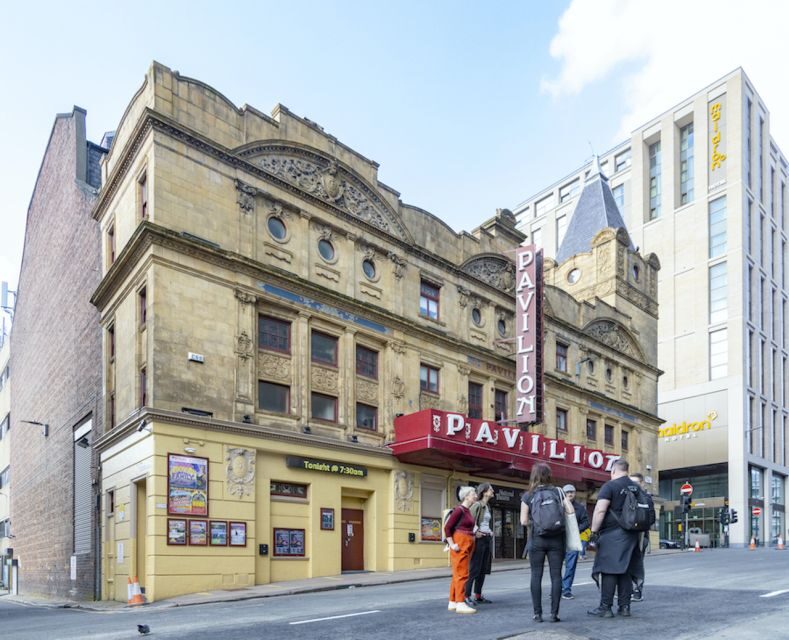
This tour is built for city-center walking with some elevation changes. The essentials are simple:
- Wear comfortable, flat shoes.
- Bring waterproof clothing in wet weather.
- Expect stairs and inclines.
Photo tip: because the itinerary is fast, keep your camera/phone ready and your route awareness intact. At the end of the walk, you may have a chance for stage photos at King Tut’s, but you don’t want to spend the whole tour fumbling with your bag.
Should you book Glasgow’s Music Mile Tour?
Book it if you want a high-value, story-driven walk that connects iconic venues like the Apollo and King Tut’s with major Glasgow music energy like Celtic Connections. At $26 for 2 hours, it’s priced like a cultural orientation you can finish and still enjoy the rest of your day.
Skip it or choose a slower option if you need long photo time, low walking intensity, or you know accent-heavy group tours are hard for you. For most people, though, this tour hits a sweet spot: you leave with a clearer sense of Glasgow’s musical geography and a stronger sense of how the city’s scenes link together.
FAQ
What is the duration of Glasgow’s Music Mile tour?
The tour lasts 2 hours.
Where do I meet for the tour?
Meet on the steps of the Sauchiehall Street entrance to the Glasgow Royal Concert Hall.
How much does the tour cost?
The price is $26 per person.
Is the tour suitable for children?
The minimum age is 14 years due to licensing laws.
What’s included in the tour price?
The tour includes a 2-hour guided walk, an experienced guide, and a refreshment stop in Nice ’n’ Sleazy.
Are drinks included?
No. Drinks or meals are not included, even though there is a refreshment stop.
What language is the tour in?
The tour is in English.
Are there stairs during the tour?
Yes. There will be stairs and inclines, so comfortable shoes are recommended.
Can I pay later or reserve without paying today?
Yes. You can reserve now & pay later, so you don’t pay nothing today.
Is free cancellation available?
Yes. You can cancel up to 24 hours in advance for a full refund.