REVIEW · GLASGOW
Glasgow: The Magnificent and Mysterious History of Glasgow
Book on GetYourGuide →Operated by Historic Walking Tours of Glasgow · Bookable on GetYourGuide
Glasgow has secrets in its street corners. This walk pairs 6th-century roots with the city’s 19th-century power surge, then points you straight at today’s creativity on Merchant City streets. I also really like the mix of big, official landmarks like Glasgow City Chambers and smaller, offbeat sights that you’d otherwise walk past.
The trade-off is simple: it’s a 2.5-hour on-foot route in Glasgow’s famously changeable weather. Bring rain gear, wear proper shoes, and don’t plan to treat it like a slow stroll. You’ll enjoy it more if you’re comfortable keeping a steady pace and standing for short photo stops.
In This Review
- Key highlights worth your attention
- From Costa Coffee to City Chambers: getting your bearings with purpose
- Quick caution for this section
- Queen Street to the Old Merchant City: where wealth, work, and grit show up together
- Hutchesons Hall to the murals: walking from power to personality
- A note on why these stops work
- Candleriggs, the Tron Theatre, and Sharmanka: theatre in the middle of real streets
- Quick watch-out
- Britannia Panopticon and the murals that keep talking
- Babbity Bowster to the Ramshorn: the darker human side of Glasgow
- Finishing at Glasgow Cathedral: Saint Mungo and the end of the walk’s story arc
- Price and value: what $18 buys in real time
- What you’re really paying for
- Weather, pace, and who should book (and who should rethink)
- Should you book this Glasgow history walk?
- FAQ
- How long is the tour?
- Where does the tour meet?
- Where does the tour end?
- What is the language of the tour?
- Is the tour outdoors, and does it run in bad weather?
- What should I bring?
- Can I bring luggage or large bags?
- Is it suitable for children under 10 or for limited mobility?
Key highlights worth your attention
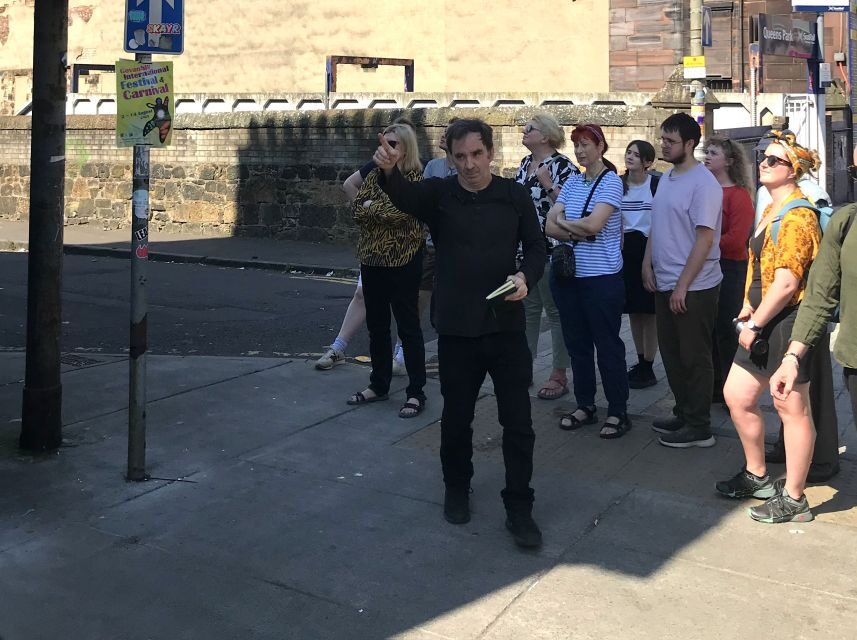
- Big civic sites, quick photo stops: City Chambers, the Cenotaph, and major monuments set the mood fast.
- Architectural storytelling across eras: Georgian, Victorian, and Edwardian details show up in the facades and sculptures you pass.
- Merchant City power and trade: You’ll see the addresses and buildings tied to merchants, traders, and workers who shaped modern Glasgow.
- Art that isn’t behind glass: Murals, theatres, and street culture are part of the history lesson.
- Britannia Panopticon detour: You get a stop at the world’s oldest surviving music hall, not just the usual tourist hits.
- Ends at Glasgow Cathedral: It’s a satisfying finish, especially after the darker, more human stories along the way.
From Costa Coffee to City Chambers: getting your bearings with purpose
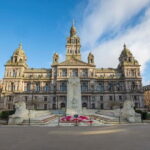
You start just outside Costa Coffee on the north side of George Square. It’s a handy meeting point because George Square is one of those places that acts like a compass for Glasgow. The benefit here is practical: you can orient yourself before you start threading through smaller streets.
Soon you’re at Glasgow City Chambers. This is where you start to feel Glasgow’s self-confidence. The building’s scale and civic role connect to the city’s rise—how it went from a small settlement into a place with money, ambition, and official power. Expect a photo stop plus a guided explanation that ties the architecture to the city’s social and political goals.
Next comes the Cenotaph. It’s brief, but it matters. War memorials are a fast way to understand what a city chooses to remember. The guide’s job is to connect the monument to the lived reality behind it, not treat it like just another stone stop.
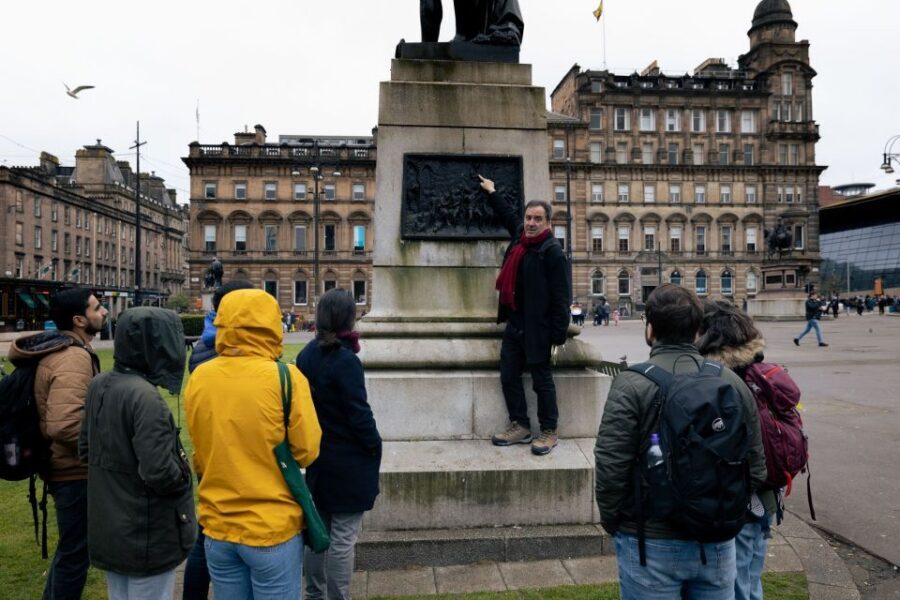
Then you’ll shift into monuments: Walter Scott and Robert Burns. These aren’t random statues along the route. They’re part of the story of how Scotland marketed its identity—writers and thinkers turned into symbols you can literally walk up to. If you like your history with faces and personalities, this section gives you that.
Other gothic and historical Glasgow tours we've reviewed in Glasgow

Quick caution for this section
This part is mostly outdoors and involves standing still for short moments. If the weather turns, you’ll want that rain layer ready before you leave the square.
Queen Street to the Old Merchant City: where wealth, work, and grit show up together
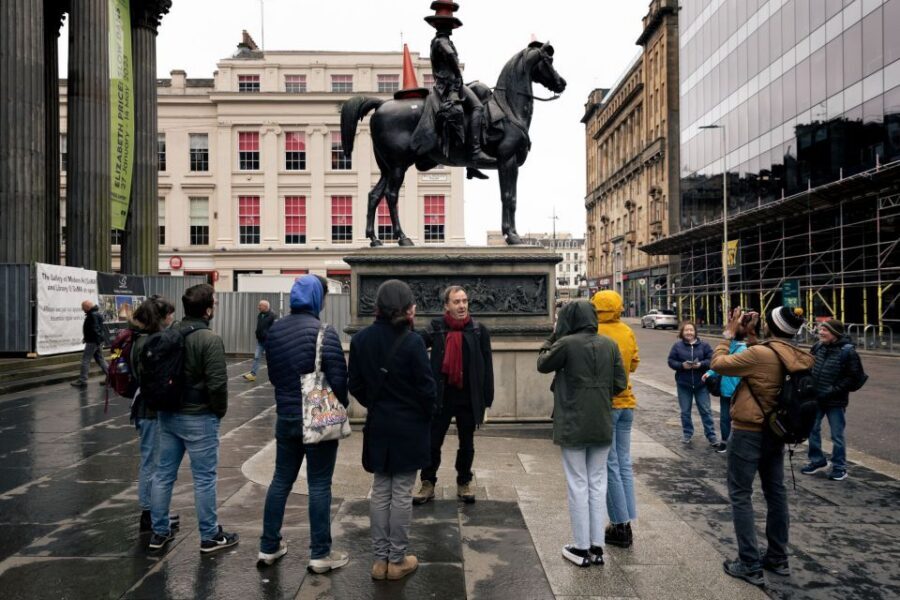
After the monuments, the walk tightens into the city’s older commercial fabric. You’ll pass specific addresses like 155 Queen Street and pop by places that hint at everyday life—there’s even a Paesano Pizza stop on the route, useful if you’re thinking ahead about where to eat later.
Then you reach the Tobacco Merchant’s House. This is one of those buildings that makes sense the moment you look closely: it screams trade money and status. The guide’s focus here is what trade did to the city’s streets—who built, who profited, and who had to keep things running. It’s a good reminder that architecture is rarely just art. In Glasgow, it’s also a record of economics.
Virginia Court follows. This type of structure often tells you more about housing and daily living than a grand building does. It’s the kind of stop that makes you think about the people behind the prosperity—especially the workers whose names rarely make it into the headlines.
At the Merchant City Inn, the atmosphere shifts again. You’re still in the historical core, but the stop helps you picture the city as a working place: meetings, deliveries, visits, and the constant movement of goods and people. It’s a grounding moment before the story turns toward the more unusual details.
One of the more quirky stops is the Jacobean corsetry. It sounds oddly specific because it is. That’s the point: the guide uses these small, surprising details to show how Glasgow’s economy wasn’t only about shipping and banking—it also supported trades and crafts that shaped clothing, fashion, and local industry.
Then comes the Old Police Post. A police station on a walking tour might not sound exciting, but it turns into a history lesson about order and control—how cities respond when wealth grows fast and society gets complicated.
You also pass Rab Ha’s Hotel. It’s another example of Glasgow history living in plain view. Even if you don’t know the building’s full backstory at first, the guide ties it into the city’s changing fortunes, so it doesn’t feel like a random detour.
Hutchesons Hall to the murals: walking from power to personality
Next you’ll see 1802 @ Hutchesons Hall. The year in the name is doing work—it signals that this place has long roots. It helps you connect Glasgow’s expansion with education, community life, and institutions that supported the city’s growth.
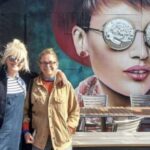
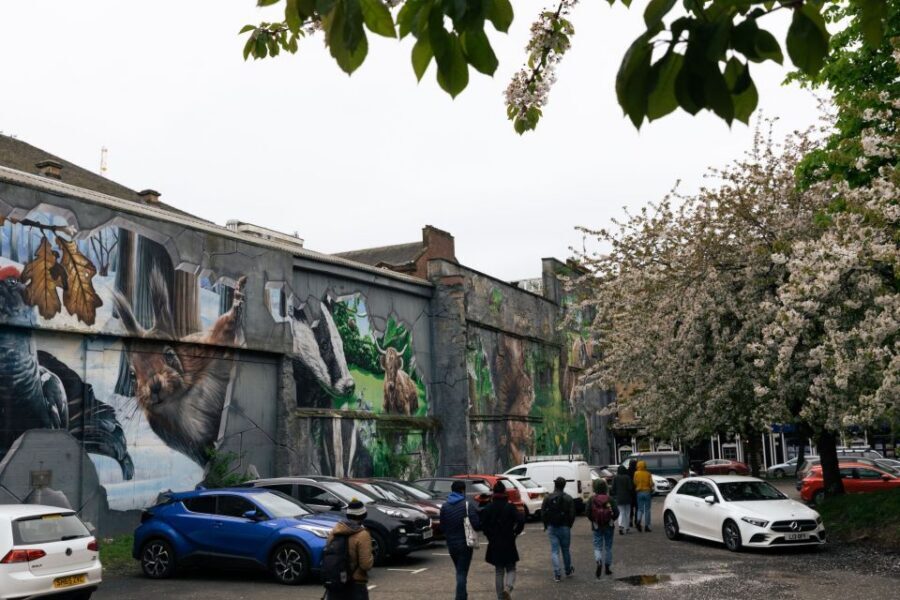
After that, you’ll hit mural culture with BOW DOWN, HONOUR THE ROOTS (#29 Mural Trail). This is where the tour stops acting like it’s only about old stone. Murals and street art become another way to tell the story of who belongs in Glasgow, what the city remembers, and what it argues about.
You’ll also arrive at City Halls & Old Fruitmarket. The old fruit market part helps explain how Glasgow fed itself and moved goods in practical ways, while City Halls shows you the ceremonial side of civic life. Put together, it’s a nice one-two punch: everyday commerce plus official grandeur.
A note on why these stops work
This middle stretch is where the tour earns its reputation for being fun without getting fluffy. The guide connects the dots between money, architecture, and identity, so you’re not just looking at buildings—you’re learning how the city operated.
Other historical tours in Glasgow


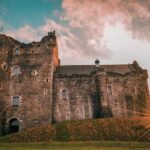
Candleriggs, the Tron Theatre, and Sharmanka: theatre in the middle of real streets
Candleriggs comes next. This is the kind of street that feels like a hinge—linking markets and cultural life. It’s also a spot where you can notice how street widths, angles, and storefront spacing influence what a city feels like on foot.
Then the Tron Theatre. Even if you’re not a theatre person, this stop is useful. It shows how arts and entertainment become part of a city’s social engine. The guide uses it to explain Glasgow’s reputation and how public life formed around performance and gathering.
Sharmanka Kinetic Theatre follows. This is one of those stops that feels like a breath of fresh air after all the stone and monuments. It highlights how modern Glasgow still makes room for odd, imaginative, and physical art forms—things you can experience with your own eyes instead of just reading about.
Quick watch-out
Some of these stops can involve crossing streets and moving through tight areas with groups. Comfortable shoes matter more here than you’d think.
Britannia Panopticon and the murals that keep talking
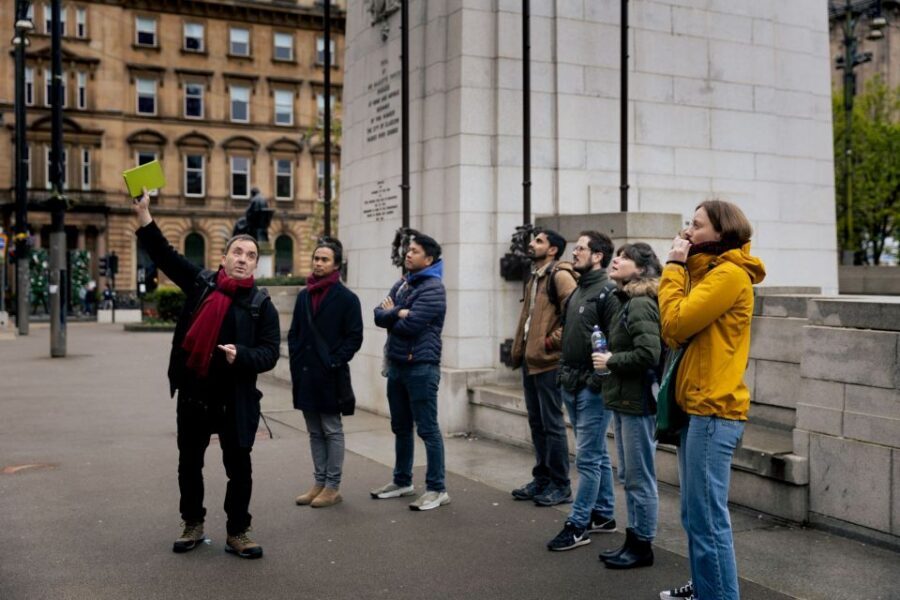
Now you get to one of the tour’s standout surprises: the Britannia Panopticon Music Hall Trust stop. The description highlights it as the world’s oldest surviving music hall, and that fact alone gives it weight. But the best part is how the guide uses it to connect entertainment to history—how popular performance reflects who had power, who had leisure, and what stories people wanted to hear.
You’ll then hit Mural Trail #.09 Billy Connolly. This works as a bridge between the music hall idea and modern Glasgow identity. Connolly is tied to Scottish humour and character, and murals like this show how public art becomes a memory machine.
At the Briggait, you’re back in the working-city vibe again. The area is associated with markets and trade energy, and the guide’s commentary helps you read the space like a map of commerce rather than just a backdrop.
Bare Bones Chocolate Ltd is a quick stop, but it serves a purpose on a history walk: it reminds you that Glasgow keeps creating. If you’re hungry, this is also a practical moment to plan snacks for later.
Saltmarket then Mercat Cross. Saltmarket is tied to the city’s trading past, while Mercat Cross is a classic symbol of market authority—proof that Glasgow didn’t just grow through wealth; it grew through systems of exchange.
High Street comes next, leading you toward more character-filled folklore and local legend.
Babbity Bowster to the Ramshorn: the darker human side of Glasgow
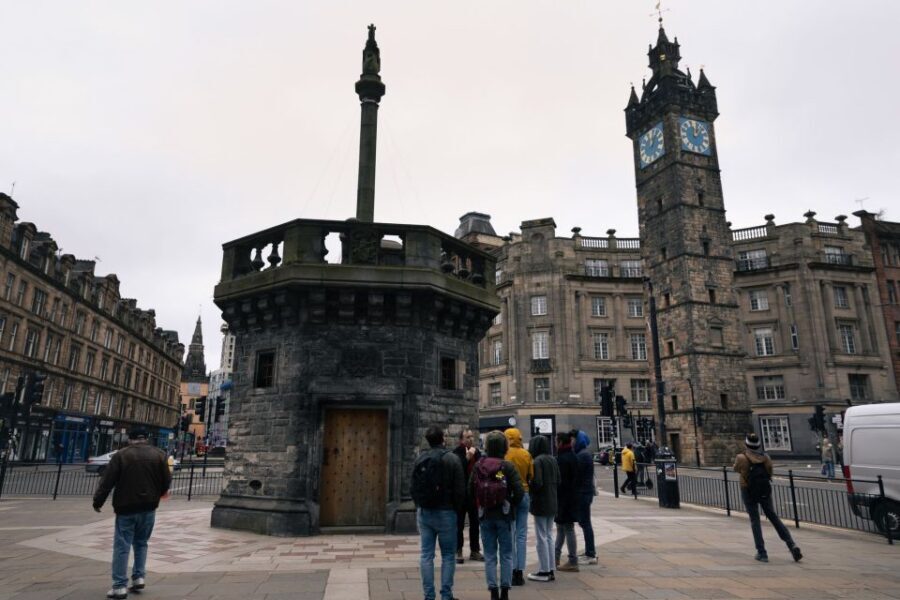
Babbity Bowster is a stop that leans into story. Folklore is part of a city’s emotional map, and the guide uses it to point out the relationship between fear, punishment, and the rumours a society tells itself.
Then there’s the Fellow Glasgow Residents mural. This kind of work brings modern identity into the frame, but the guide typically ties it back to older patterns: who’s included, who’s celebrated, and who gets left out.
The final historical stop is the Ramshorn. Even without extra background, you can sense how a building like this anchors the city’s older layers. It’s a useful pause before the finish, especially if the tour has spent time on scandals and darker secrets—because it gives your mind something solid to land on.
Finishing at Glasgow Cathedral: Saint Mungo and the end of the walk’s story arc
You finish at Glasgow Cathedral. This is a strong closing location because it sits at the crossroads of legend, religion, and city identity. The guide often brings up the story connected with Saint Mungo (sometimes heard as Saint Mongo on the tour), tying the sacred heritage to the city’s broader evolution.
After walking through merchant wealth, civic monuments, and entertainment spaces, the cathedral feels like a final chapter. Not because it wraps everything up, but because it shows how Glasgow’s identity keeps getting rewritten on top of earlier foundations.
Price and value: what $18 buys in real time
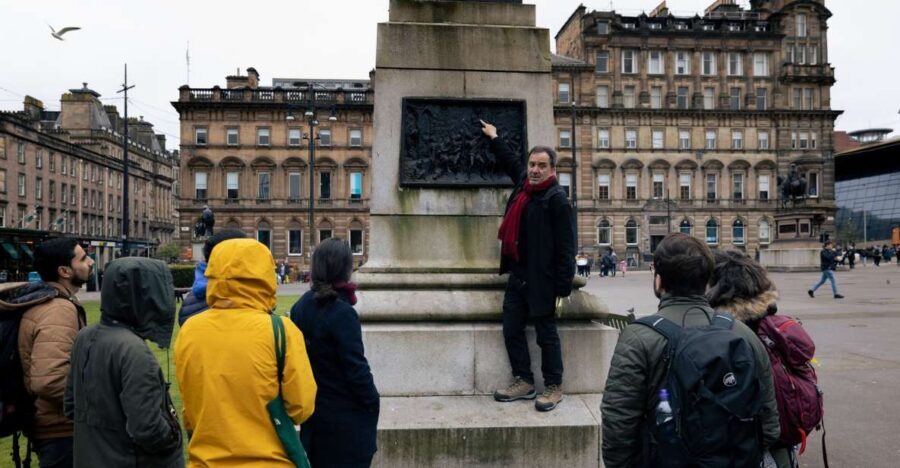
At $18 per person for about 2.5 hours, this is the kind of deal that works best when you’re trying to get a lot of context without spending a full day on museums. You’re not only seeing major attractions like City Chambers; you’re also getting detours to the less expected places such as the Britannia Panopticon and the Ramshorn.
The value is also about pacing. The route is structured around short photo stops and walking segments, so you’re learning without feeling stuck in one location too long. Based on what I’ve seen from guide styles on this route, the best experience comes when the guide uses humour to keep facts easy to follow—names that have led tours here include Bruce, Henry, Ben, and James.
What you’re really paying for
You’re paying for a translator of the city. Left alone, you might notice the buildings. With a guide, the buildings start telling you why they exist and how the people around them shaped Glasgow into the so-called Second City of the Empire.
Weather, pace, and who should book (and who should rethink)
This tour is rain or shine, and Glasgow weather can change fast. Bring rain gear. Plan on holding steady in crowds and on uneven pavement.
In terms of fitness, it’s aimed at people with a reasonable level of stamina. One past group noted the walk felt like about 4 km across the 2.5 hours. If you can do that comfortably in a city centre while standing for short stops, you’re in good shape.
It’s not suitable for children under 10, people with mobility impairments, or anyone with low fitness. If you’re travelling with a stroller or need step-free routes, this may not match your situation.
Language-wise, it runs in English.
Should you book this Glasgow history walk?
Yes, if you want a smart, story-driven orientation to Glasgow’s core—especially if you like history that connects to street-level life. The tour’s biggest win is its balance: civic monuments and 19th-century prosperity on one side, and today’s murals and music-hall oddities on the other.
Book it early in your trip if you can. You’ll leave with a mental map and a better way to spot what’s worth a second look—like architectural details, market cues, and the creative landmarks that make Glasgow feel more modern than the postcards.
FAQ
How long is the tour?
It lasts about 2.5 hours.
Where does the tour meet?
The meeting point is just outside the main entrance to Costa Coffee, on the north side of George Square.
Where does the tour end?
It finishes at Glasgow Cathedral.
What is the language of the tour?
The tour guide speaks English.
Is the tour outdoors, and does it run in bad weather?
Yes. The tour takes place rain or shine, since Glasgow weather can be very changeable.
What should I bring?
Bring comfortable shoes and rain gear, plus weather-appropriate clothing.
Can I bring luggage or large bags?
No. Luggage or large bags are not allowed.
Is it suitable for children under 10 or for limited mobility?
No. It is not suitable for children under 10, people with mobility impairments, or people with low level of fitness.