REVIEW · GLASGOW
The Magnificent and Mysterious History of Glasgow
Book on Viator →Bookable on Viator
Glasgow has secrets you can walk to. This 2.5-hour Merchant City walk connects big landmarks with the stories behind them, from City Chambers and George Square statues to Glasgow Cathedral and St Mungo’s Museum. I especially like the way the guide turns stone and bronze into real meaning, plus the mix of headline stops and practical, in-the-neighborhood details that help you understand where to wander next.
The main thing to think about is the pace: you cover a lot in about 2 hours 4 minutes to 2 hours 14 minutes (plus walking time), and the tour runs on good weather. If you’re sensitive to hearing outdoors or you prefer slower sightseeing, you may want to plan breaks into your day.
In This Review
- Key takeaways
- A Two-and-a-Half Hour Walk That Makes Glasgow Make Sense
- Start at George Square: City Chambers and the Glaswegian Power Look
- George Square Statues: Scott and Burns in Public, Not Textbooks
- Merchant City Money and Craft: From Merchant’s House to Trades Hall
- Art and Music Along the Way: Gallery of Modern Art to Britannia Panopticon
- A Georgian Townhouse and Clubs That Changed Jobs
- Faith, Charity, and Street Marks: Saints of Ingram and Ingram’s Surroundings
- Music Hall to Market Cross: Mercat Cross and High Street’s Biggest Messages
- The Ending That Hits: Cathedral, Provand’s Lordship, and St Mungo Museum
- Price, Pace, and Group Size: When This Tour Is a Great Deal
- Who Should Book This Walk—and Who Might Want Something Different
- Should You Book the Magnificent and Mysterious History of Glasgow?
- FAQ
- How long is the Glasgow history walking tour?
- Where does the tour start and end?
- Is admission included for the stops?
- What’s the walking like?
- What language is the tour offered in?
- Is it okay to bring service animals?
- What happens if the weather is bad?
Key takeaways
- City Chambers gives you the 19th-century Glaswegian mindset in sculpture form
- George Square statues (Scott and Burns) show how Scotland’s identity gets staged in public space
- A surprising mix: Gallery of Modern Art plus Britannia Panopticon Music Hall plus a quick stop for local pizza
- The walk works well for first-timers because it connects medieval street patterns to today’s cultural district
- The ending is strong: Glasgow Cathedral, Provand’s Lordship, then St Mungo Museum
- Small group size (max 15) helps the stories stay interactive
A Two-and-a-Half Hour Walk That Makes Glasgow Make Sense
If you want Glasgow without the guesswork, this is a smart first city-center move. The route is built like a storyboard: power, trade, religion, art, and everyday life all show up in a compact area. You get to see major landmarks and still feel like you’re walking through real neighborhoods, not a highlight reel of far-flung sites.
I like that the tour leans into the parts that make the city interesting, not just pretty. You’ll hear why Glasgow built what it built, how different groups shaped the city, and why certain places mattered. The guide also brings humor into the mix, and you’ll often get little details that make a stop feel personal instead of academic.
One more practical win: many stops are marked as free admission. That matters because it turns what could be a pricey sightseeing plan into a “pay once, see a lot” afternoon.
Other gothic and historical Glasgow tours we've reviewed in Glasgow


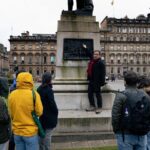
Start at George Square: City Chambers and the Glaswegian Power Look
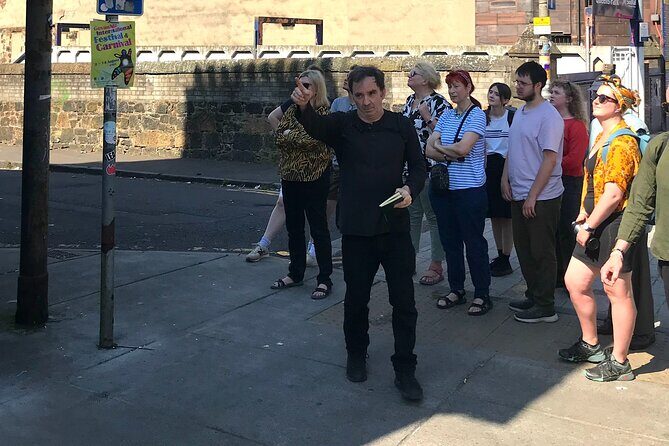
You begin at George House, 50 George Square, a place that already tells you something about Glasgow: this city was built to be seen. The opening stop at Glasgow City Chambers is a strong way to start, because it’s the headquarters of the city council and it carries heavy 19th-century visual confidence. The sculptures on the building help explain how Glaswegians wanted to define themselves.
This is also a good time to reset your expectations. You’re not just taking snapshots. You’re learning how to read the city. City Chambers is one of those buildings where knowing what you’re looking at changes the whole experience.
From there, the walk nudges you into a more reflective mode with Glasgow War Memorial. It’s not just a monument to look at; it’s a piece of public symbolism that marks a turning point in how Glasgow understood its place in the wider world.
George Square Statues: Scott and Burns in Public, Not Textbooks
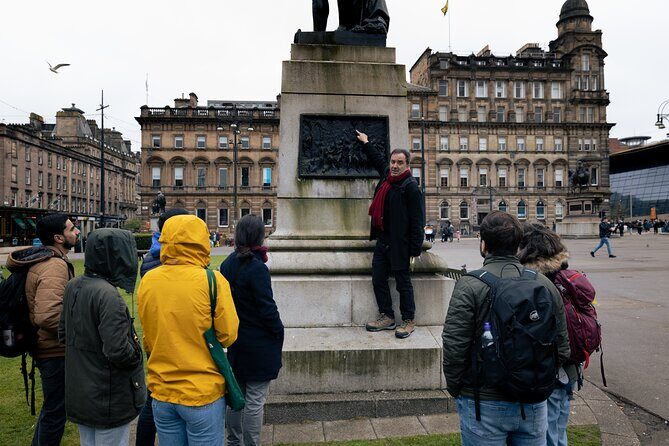
Next comes the statuary circuit in George Square, and it’s more than tourist photos. You’ll stop by the Sir Walter Scott Statue, a centerpiece that connects to how Scotland’s modern image took shape through writers and public imagination. It’s a reminder that culture isn’t only in libraries. It lives in stone.
Then you hit the Robert Burns Statue, and this stop is a story engine. The tour notes it as the first monument to Scotland’s national poet, and even calls out its early crowdfunding vibe: thousands paid small amounts (as little as 5 pence) toward the sculpture, and around 30,000 people turned up for the unveiling. That’s the kind of detail that makes a statue feel like a community project, not just public art.
If you like learning how identity gets packaged for public spaces, these George Square stops are some of the best “why this city feels the way it does” moments on the route.
Merchant City Money and Craft: From Merchant’s House to Trades Hall
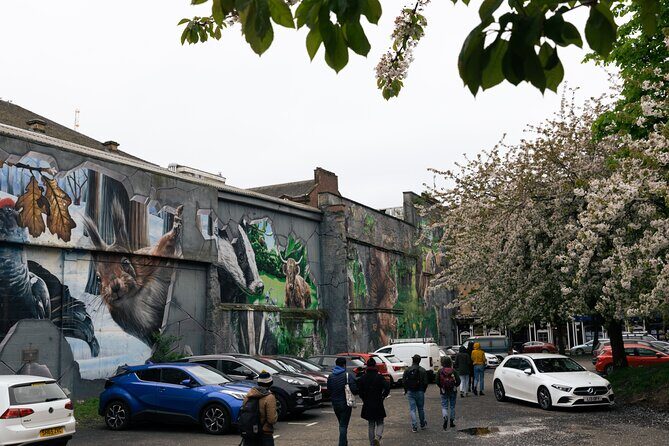
After George Square, the tour starts showing how Glasgow ran on people who made, bought, managed, and organized. The first major business marker is Merchant’s House. It’s tied to the merchants of Glasgow and the prosperity that helped shape modern Glasgow. Even if you only spend a few minutes at the building, the tour frames it as a window into how these merchants viewed themselves and their status.
From there, the route keeps tightening the focus on trade systems. You’ll see Trades Hall of Glasgow, described as representing traders and craftspeople like carpenters, tanners, and dyers, and as a structure that looked after members who became too old to work. It’s a different kind of “history of Glasgow,” one that comes from institutions built to manage real lives.
The walk also takes you through the idea of how cities reduce risk. One stop highlights an important medieval street where candle makers lived and worked, set apart from the old town to reduce fire risk. Later, it became the site of markets and warehouses, and now it sits in the modern cultural district. You get the sense that Glasgow adapted its geography as its industries changed.
Art and Music Along the Way: Gallery of Modern Art to Britannia Panopticon
One of the best surprises on this tour is how naturally it mixes business and culture. At Gallery of Modern Art, the tour points out that the building began as a private mansion house and later served different uses before becoming a gallery. That’s a useful concept: in Glasgow, even the art spaces carry layers of older purpose.
Then you’ll hit Britannia Panopticon Music Hall, called the world’s oldest surviving music hall. This is one of the stops where you get a quick but memorable story: the tour notes that a young Stan Laurel performed there. If you like pop-culture footnotes tied to old venues, this is your moment.
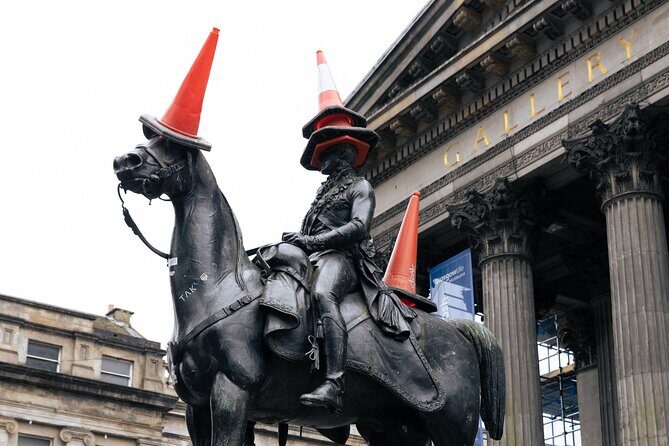
Between the art and music stops, there’s also a Duke of Wellington statue that adds a bit of street-level comedy. The tour calls out why it’s famous today: a traffic cone placed on the Duke’s head. It’s silly in a good way, and it reminds you that Glasgow’s humor can live right next to its grand architecture.
And yes, the route includes a very quick pause at Paesano Pizza. It’s only about a minute, but that’s exactly why it works: you leave the tour knowing a reliable local spot for later, and you also get the sense that this walk isn’t stuck in monuments only.
Other historical tours in Glasgow



A Georgian Townhouse and Clubs That Changed Jobs
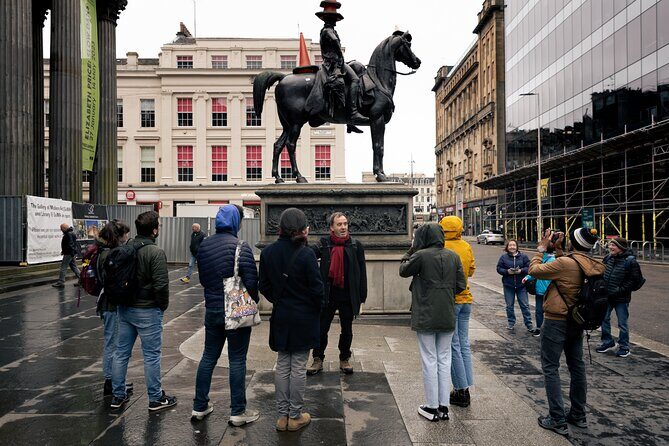
The middle of the walk includes a stop at an 18th-century, Georgian townhouse in the heart of modern Glasgow. The tour frames it as a place where the original family had an interesting story. Even with limited time, that kind of stop helps the city feel layered rather than locked into a single era.
Then comes The Corinthian Club, which the tour describes as having been a bank, a courthouse, and a county building before becoming a high-profile club and wedding venue. If you’re trying to understand Glasgow’s evolution, this stop is a shortcut: the city repurposes buildings as its needs change, and the same structure keeps collecting new meanings.
This is also a good part of the tour for people who like architecture, because the guide tends to connect what you see to who had power in each era.
Faith, Charity, and Street Marks: Saints of Ingram and Ingram’s Surroundings
You’ll spend time at Saints of Ingram, which the tour connects to merchant and hospital institutions that looked after citizens for years. It also references the tour’s trio concept: along with the original Merchants House and the Trades House, Hutchenson’s Hospital was part of a group described as the three graces of Glasgow. Even if you don’t remember every name, the idea sticks: Glasgow built support systems, not just wealth.
Nearby, the route continues into areas tied to commercial history and then re-use. City Halls & Old Fruitmarket are part of that arc. The Old Fruitmarket building still stands but has been converted to retail use. Walking through it is the point: you get to imagine the earlier rhythm of commercial Glasgow instead of only reading about it.
If you like murals and street art, the route does not ignore modern Glasgow’s visual identity. It includes Trongate 103, an arts centre, plus mention of the Sharmanka Kinetic Gallery. The tour uses this as a bridge from old streets to today’s creative energy.
Music Hall to Market Cross: Mercat Cross and High Street’s Biggest Messages
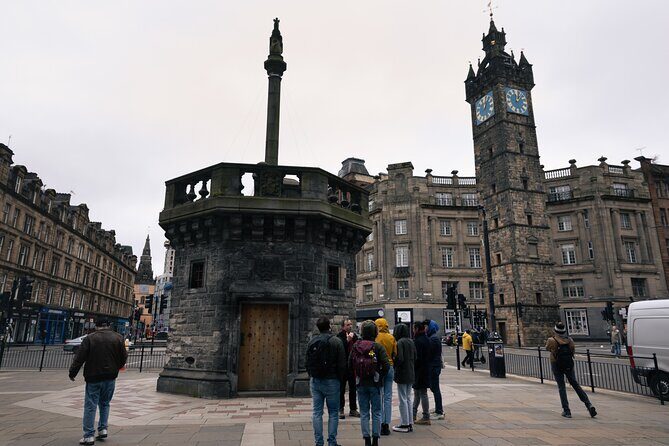
As you head toward the city’s medieval core, the stop at Mercat Cross gives you a direct explanation of how proclamations once played out in public. It’s described as a recreation of a medieval market cross, which makes this an easy stop to appreciate even if you’re not a medieval specialist.
Then you get a longer, more walk-and-look segment on High Street, framed as the heart of medieval Glasgow. Here you’ll find several attractions along the road, including the site of the old University, described as the fourth oldest in Britain, plus murals relating to St Mungo, Glasgow’s patron saint, and other significant buildings. The murals matter because they turn a religious figure into a city-wide story you can see without opening a guidebook.
Even with all the stops, the pace between highlights is designed to keep moving. Still, it’s long enough to feel like you’re actually walking through Glasgow’s layers, not hopping between isolated photo spots.
The Ending That Hits: Cathedral, Provand’s Lordship, and St Mungo Museum
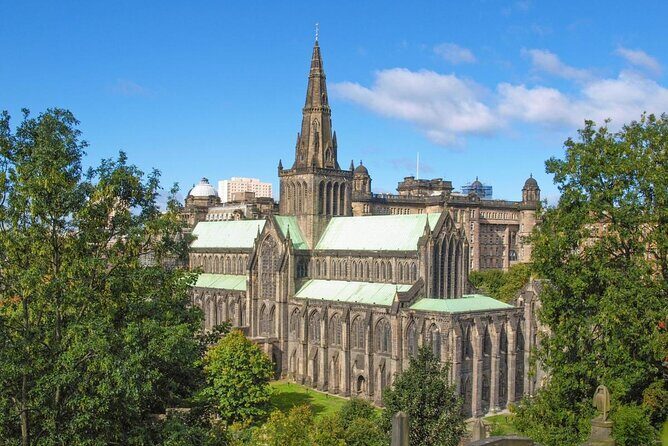
The final stretch is where the tour becomes quietly memorable. Glasgow Cathedral is the biggest “bookend” moment, with the tour finishing by looking inside the 13th-century structure. The tour also notes there has been a church on the site since the 6th century, which gives you a sense of continuity even when the city’s look keeps changing.
After that, you’ll visit Provand’s Lordship, described as dating back to the 14th century, and then finish with St Mungo Museum of Religious Life and Art. The museum is built to look like an older building and celebrates different religions followed around the world. It’s a thoughtful way to end a walk that’s already touched religion, charity, and civic symbolism throughout.
If you’re the type of person who likes your trip to end with a “now I get it” feeling, this finale helps.
Price, Pace, and Group Size: When This Tour Is a Great Deal
At $17.91 per person, this is one of those city tours that feels like a bargain when you see the range of stops. Many are marked as free admissions, and the route covers everything from civic architecture to medieval streets and major landmark interiors. You also get a small group cap of 15, which is a real quality factor for a walking tour.
That said, the tour is still a walking tour. Plan for the stated walking time of around 40–45 minutes spread between attractions, and expect the full experience to run around 2 hours 45 minutes. Wear comfortable shoes, and bring a layer for Scotland’s habit of changing its mind.
On timing and logistics, there are two things to know. First, the tour needs good weather, and it can be rescheduled or refunded if it’s canceled for weather. Second, it does not end back at your start point. It finishes outside the Ramshorn Church on Ingram Street, not far from the starting area, but it’s still a “walk forward, not back” ending. If you’re stacking tours, give yourself time afterward to explore without rushing.
Who Should Book This Walk—and Who Might Want Something Different
This tour fits best if you want a fast way to build a mental map of central Glasgow. I think it’s especially good for:
- first-timers who want bearings fast
- people who like civic buildings, statues, and how cities present themselves
- travelers who enjoy a mix of art, religion, and everyday urban life
- anyone who appreciates free-entry stops and a guide who tells stories in plain language
It may be less ideal if you:
- need a slower pace or frequent sit-down time
- hate crowds or worry about hearing in outdoor spaces
- prefer tours that end right where you began (this one finishes elsewhere)
Should You Book the Magnificent and Mysterious History of Glasgow?
Yes, if your goal is orientation plus story. This is the kind of walk that helps you stop seeing Glasgow as random streets and start seeing the logic underneath it: who built what, why it was built, and how the city’s identity shows up in stone, institutions, and art. The value is strong for the price, largely because many stops are free admissions, and the route hits a lot of major sites without feeling like a frantic rush.
My advice: book it early in your stay. Do it before you commit to the rest of your Glasgow plan. After this, you’ll know what to revisit and what to skip, and you’ll feel more confident wandering the Merchant City on your own.
If you do book, come ready to listen and take your time at the biggest finale stops: Glasgow Cathedral and St Mungo Museum are the payoff moments that make the whole afternoon click.
FAQ
How long is the Glasgow history walking tour?
It runs about 2 hours 4 minutes to 2 hours 14 minutes, with total experience time listed around 2 hours 45 minutes when you include walking between stops.
Where does the tour start and end?
It starts at George House, 50 George Square, Glasgow G2 1EH, and ends outside the Ramshorn Church on Ingram Street at 98 Ingram St, Glasgow G1 1EX.
Is admission included for the stops?
Many stops list free admission tickets. The tour also includes time to view major landmarks and interiors where applicable.
What’s the walking like?
There is walking time between attractions, around 40–45 minutes, plus short stop times at each location.
What language is the tour offered in?
The tour is offered in English, and you’ll use a mobile ticket.
Is it okay to bring service animals?
Yes, service animals are allowed.
What happens if the weather is bad?
The tour requires good weather. If it’s canceled due to poor weather, you’ll be offered a different date or a full refund.