REVIEW · GLASGOW
Glasgow: Historical Walking Tour: Guided by a local actor
Book on GetYourGuide →Operated by scotlandtouring · Bookable on GetYourGuide
Actors make Glasgow history talk. This guided walk uses a professionally trained local actor to bring central Glasgow to life, from George Square’s grand buildings to the darker turns of the city’s past. I like that the storytelling blends architecture and politics in plain, entertaining chunks, so you don’t just memorize dates—you understand why places matter. One consideration: it’s only about two hours, so it covers a good spread of highlights rather than every street corner in-depth.
You’ll start in George Square, then work your way through the city’s core stops like the Gallery of Modern Art area and the Merchant City lanes, with key moments tied to Roman/early Christian roots, empire, labor politics, and Irish influence. Guides such as Ian, Martin, Luke, and Gordon are repeatedly praised for keeping the tone fun and clear, with strong projection and room to ask questions. The main drawback to weigh is that some people feel it’s shorter and covers less ground than other long-form walks, even though the pacing is lively.
In This Review
- Key Highlights You’ll Actually Feel Walking These Streets
- Why This Tour Works: Actor-Driven Storytelling in Central Glasgow
- Meeting Point at George Square: Easy Find, Quick Start
- Stop One Through Stop Three: George Square’s Victorian Power and a Fast Photo Moment
- From George Square to the City Core: Walking the Switch from Old Faith to New Commerce
- The Gallery of Modern Art Stop: One Building, Several Lenses
- Merchant City Lanes: Hidden Alleys and the Medieval Core Feeling
- Trading Barons, Fortunes, and the American War Story Thread
- Irish Immigrants and the Social Pressure of City Growth
- Glasgow Cathedral and the Police Museum: Where the Tour’s Tone Gets Real
- Closing at Mercat Cross and the Glasgow Cross Execution Story
- What the Tour Includes (And the Smart Reason It Doesn’t Try to Do Everything)
- Who This Tour Fits Best
- Practical Tips to Get the Most Out of Your 2 Hours
- Should You Book This Glasgow Actor-Led Walk?
- FAQ
- How long is the Glasgow historical walking tour?
- How much does the tour cost?
- Where do I meet the guide?
- Where does the tour end?
- What happens if George Square is disrupted?
- Is the tour available in English?
- Is the tour wheelchair accessible?
- Does the tour run in bad weather?
- What should I bring?
- Are museums included?
- Is pickup from your hotel included?
Key Highlights You’ll Actually Feel Walking These Streets
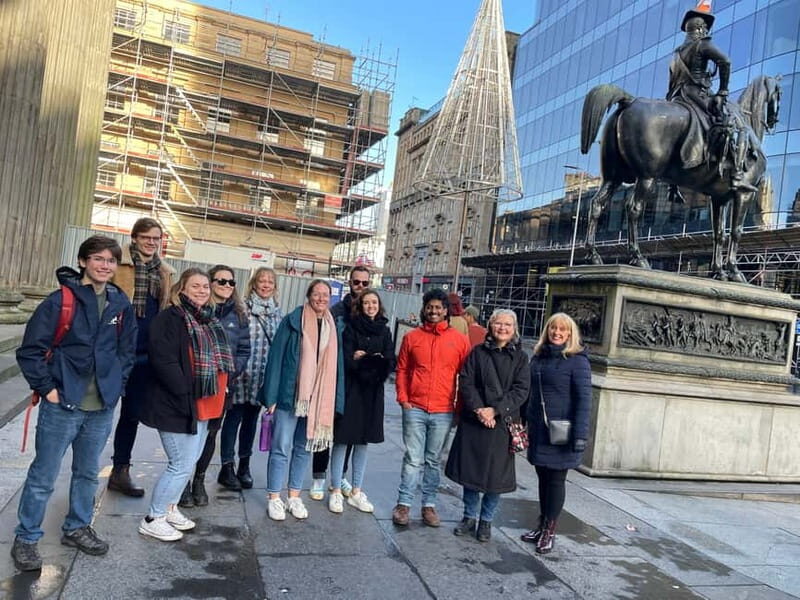
- Local actor guide: trained performance turns facts into story you can follow in real time
- George Square architecture: City Chambers, Merchants’ House, and council HQ in one walkable arc
- Merchant City lanes: you get small-street details, not just big-sight photos
- Politics in the pavement: capitalism roots, socialism, and Labor history are tied to specific locations
- Crime and consequence stops: Glasgow Cross area includes public execution history
- Art and museums pointers: free museums/galleries are flagged for later, even if time is tight
Why This Tour Works: Actor-Driven Storytelling in Central Glasgow
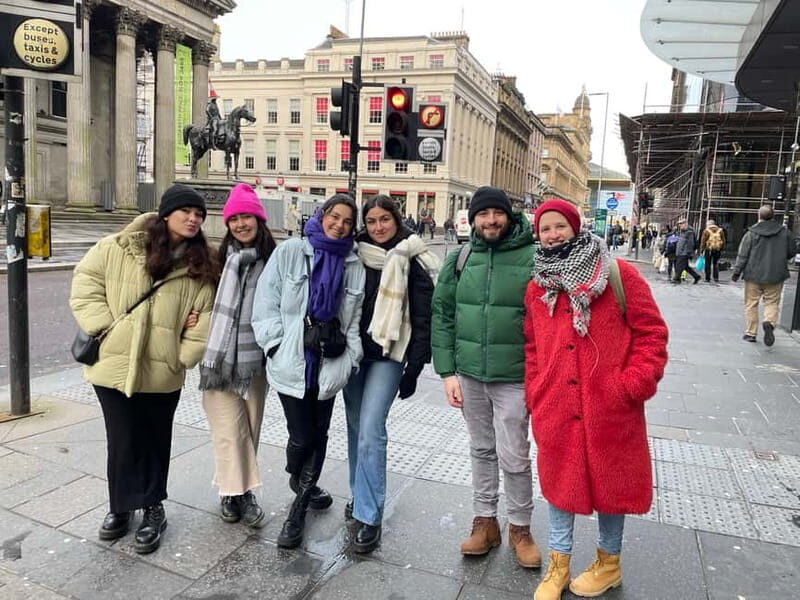
Glasgow can feel big and fast when you first arrive. This tour gives you a script—and then lets you explore the city with clearer context. Instead of rattling off a timeline, the actor-guide uses scene-like storytelling so you can connect buildings, street patterns, and major turning points.
Two things make it especially practical. First, the guide lives in the city and tells you what matters about it, not just what’s listed on plaques. Second, the format is built for comprehension: short segments, photo breaks, and frequent walking between stops.
The tone also matters. Multiple guides are credited with humor and even poetry recitation, which helps when the subject turns serious. You’ll still hear about empire, executions, and hardship, but the presentation doesn’t drag.
Other Glasgow city walking tours we've reviewed in Glasgow

Meeting Point at George Square: Easy Find, Quick Start
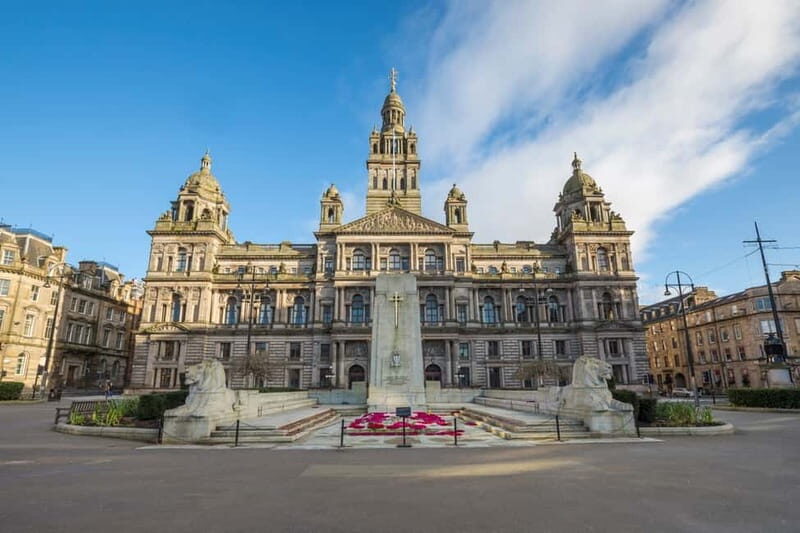
You meet your guide between the lions in George Square, just behind the White Granite Cenotaph/War Memorial. If you arrive early, take 2 minutes to orient yourself around the square first—your photos will look better, and you’ll avoid the awkward late-join scramble.
There’s also a sensible backup plan. If there’s major disruption in the square, the meeting shifts to the Piper Whisky Bar at the corner of Cochrane Street and George Square. That’s the kind of detail that keeps a walking tour from falling apart when the city is doing city-things.
Stop One Through Stop Three: George Square’s Victorian Power and a Fast Photo Moment
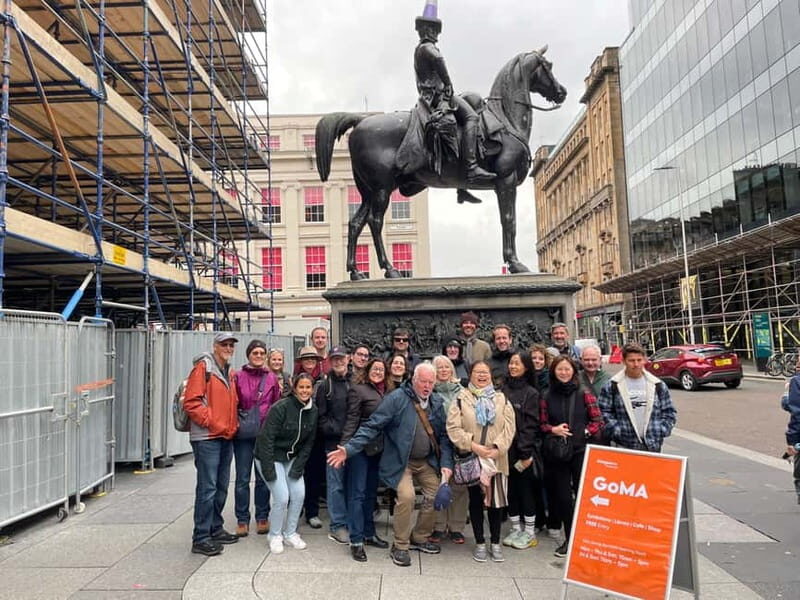
Your first chunk is anchored in George Square itself: a guided intro, then a photo stop. This matters because the square is your visual “map” for the walk. You can look up and connect what you’re seeing to what you’re hearing.
Here’s what you’ll pay attention to:
- City Chambers area with its Victorian grandeur
- Merchants’ House
- Headquarters of Glasgow City Council
You also get the story behind the square’s name—tied to an English king—and the guide connects that to how Glasgow became a major player in the British Empire. That’s not trivia for trivia’s sake. It’s the reason Glasgow’s architecture looks the way it does and why wealth concentrated here.
If you’re the kind of person who likes to take photos, the early photo break helps. It gives you a chance to capture George Square before the tour moves into narrower lanes where it’s harder to stop.
From George Square to the City Core: Walking the Switch from Old Faith to New Commerce
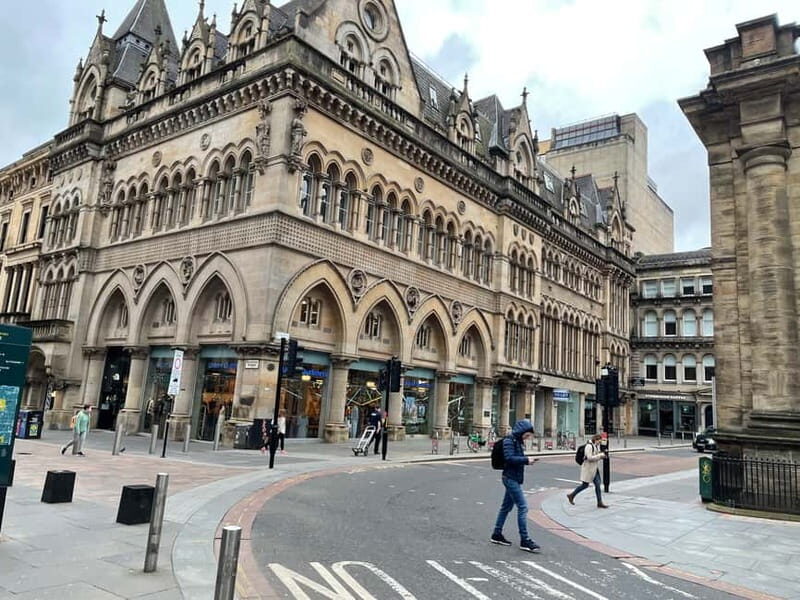
After George Square, the walk starts to change in feel. You go from grand civic views into the city’s older layers. The tour highlights early Christian and Roman heritage, plus how ancient tribes influenced where and how the city grew.
This is where an actor-guide earns their keep. It’s one thing to read about origins. It’s another to hear how those influences connect to the way the center developed. You’ll hear explanations that help you spot patterns—where power lived, where trade pushed forward, and how neighborhoods shaped daily life.
The tour also points you toward the commercial district where capitalism took root, then bridges into how socialism and the British Labor party began showing up in the story of Glasgow. Even if you don’t treat politics like a hobby, the guide’s framing makes it feel grounded: movements weren’t just abstract ideas, they were tied to streets, jobs, and local pressure.
The Gallery of Modern Art Stop: One Building, Several Lenses
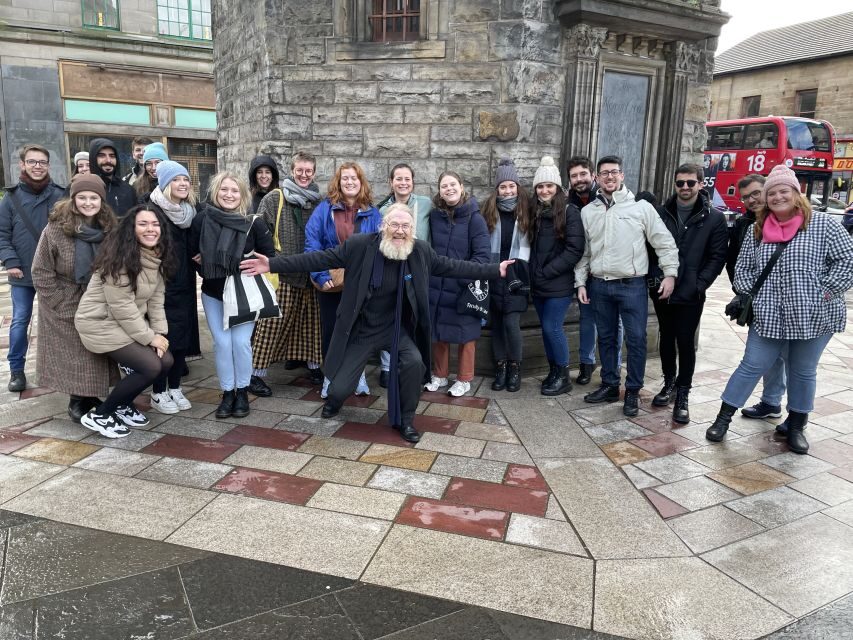
The itinerary includes a guided stop around the Gallery of Modern Art, with a walking segment afterward. You don’t need to be an art super-fan to enjoy this part. The value is that it places modern culture in conversation with what you’ve already learned about trade, power, and change.
Also, remember the practical angle: all Glasgow museums and galleries are free to visit, but the tour doesn’t have time to go inside everything. The guide will point out what you can check later. For you, that’s a smart trade-off. In two hours, you get the orientation, then you decide which museums matter enough to return for.
Other gothic and historical Glasgow tours we've reviewed in Glasgow
Merchant City Lanes: Hidden Alleys and the Medieval Core Feeling
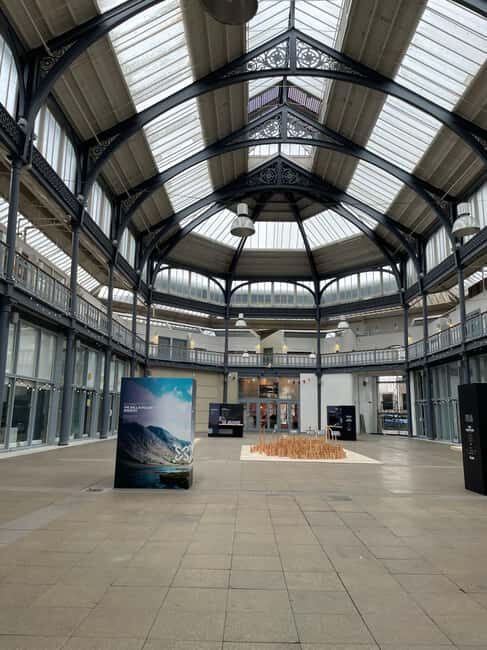
The Merchant City segment is a big reason people rate this tour highly. You’re not just standing at famous corners. You’re walking into the tighter lanes where the city’s older commercial muscle shows up.
This part emphasizes:
- the Merchant City streets and lanes
- Glasgow’s original medieval city centre feel
- the “behind the front-facing buildings” story
It’s also where you start hearing the human side of the city: who made fortunes, who lost them, and how economic swings could be brutal. One guide-style you’ll notice from the praise you’ve likely seen elsewhere is that the stories come with characters and consequences, which makes this area land emotionally, not just visually.
If you want an easy way to remember it later, focus on the lane geometry. When you come back on your own, you’ll be able to picture the historical “why” behind the street layout.
Trading Barons, Fortunes, and the American War Story Thread
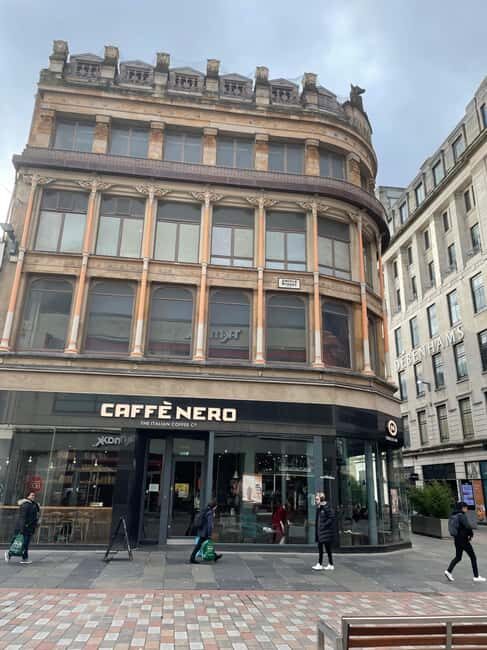
One of the most intriguing themes tied to the walk is the rise of the trading barons—the homes and palaces of the original trading elite. You’ll also hear about people who made and lost fortunes, and there’s a story thread connected to the American War of Independence possibly being set alight by Glaswegians.
Treat that as a story claim the guide explains during the tour, not as something you’re meant to verify on the spot. The payoff is the broader takeaway: Glasgow didn’t just grow quietly. It influenced events beyond Scotland, and its wealth and networks reached far.
This is also where you’ll feel why the tour calls itself actor-led. It gives you a way to follow shifting topics—empire, economics, politics—without losing the plot.
Irish Immigrants and the Social Pressure of City Growth
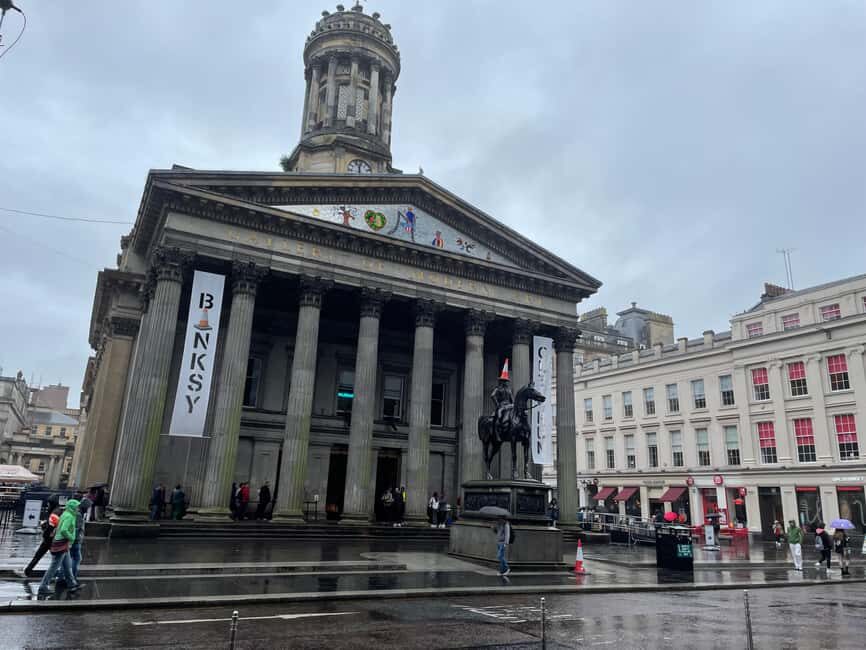
The tour specifically brings in the influence of Irish immigrants on Glasgow’s growth. Even if you’ve read about immigration in other cities, this is useful because the guide ties it to the city’s center and how communities formed as Glasgow expanded.
This matters for first-time visitors because it changes how you read the streets. You stop thinking of the city as just stone and industry and start seeing it as people settling, working, and shaping neighborhoods over time.
Glasgow Cathedral and the Police Museum: Where the Tour’s Tone Gets Real
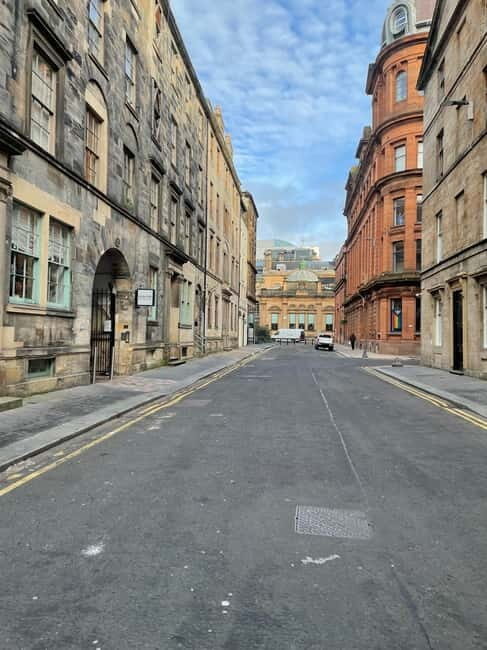
The tour description includes key sites like Glasgow Cathedral and the Police Museum, positioned toward the end of the walk. You may not spend long inside everything, but you’ll get a clear sense of why these places show up in the city’s story.
Cathedral history typically shifts the atmosphere: faith, community, and long continuity in a place that also had fast change. The Police Museum angle shifts it again, toward how law, punishment, and social control worked when things went wrong.
A few guides are praised for tackling darker topics—murder, ghosts, grave robbing—with humor and theatrical pacing. That doesn’t mean the tour avoids seriousness. It means it keeps you engaged while walking through uncomfortable parts of the past.
Closing at Mercat Cross and the Glasgow Cross Execution Story
The walk finishes at Mercat Cross, and the tour theme includes public executions that used to take place at Glasgow Cross. Even if you’ve never visited a site like this before, the effect is usually immediate: you realize how close “official punishment” sat to everyday public life.
This ending helps anchor the whole experience. You started in civic pride (George Square). You end with consequences and the harsh side of history. It makes the earlier conversations about wealth, power, and politics feel less abstract.
One small note to keep yourself safe: the activity details say it ends back at the meeting point, while the itinerary shows a finish at Mercat Cross. The best move is to confirm your specific route in your booking details so you know exactly where the last turn lands.
What the Tour Includes (And the Smart Reason It Doesn’t Try to Do Everything)
You’re paying for the guided walk, not for a jam-packed museum marathon. The key inclusion is this: museums and galleries in Glasgow are free to visit, and the guide points out options for later. The tour itself doesn’t allocate time for full museum visits.
That’s good value for two reasons.
- You get orientation in the places you’ll likely want to revisit.
- You can choose what to return for based on your interests, instead of being rushed through everything.
Price check: it’s listed at $20 per person for around two hours. That’s a strong deal in a city where major museums are free. The real “cost” is time—so wear comfortable shoes and treat this as a walking-based introduction to central Glasgow.
Who This Tour Fits Best
This is a great match if you want:
- a first-time visitor orientation in central Glasgow
- storytelling that’s funny and theatrical without being sloppy
- architecture plus social/political context
- a short, repeatable walk you can build on later
It’s also ideal if you’re traveling with mixed ages or interests. Comedy and performance keep energy up, and the stops include big landmarks plus lane-level detail.
If you hate walking, this may feel like a lot. Still, the tour is described as flat terrain, and it runs rain or shine, so it’s built for steady walking, not hills or steep climbs.
Practical Tips to Get the Most Out of Your 2 Hours
- Bring comfortable shoes. You’ll be walking through lanes and stopping briefly at multiple points.
- Pack a camera. George Square photo time helps, and the Merchant City lanes are great for street-level shots.
- Dress for the weather. The tour runs rain or shine, so plan for Scotland’s mood swings.
- Wear comfortable clothes that you can move in. It’s a walking tour, not a long sit-down event.
- If your hearing matters, this is a good sign: multiple praised guides are specifically noted for being easy to hear even on bigger groups.
Should You Book This Glasgow Actor-Led Walk?
If you want a high-value introduction to central Glasgow, I’d book it. Two hours is long enough to connect major sites—George Square, the Merchant City lanes, and the story trail toward places like Glasgow Cathedral and the Police Museum—while still leaving you energy to explore afterward.
I’d only hesitate if your priority is spending lots of time inside museums or doing a deep, slow archaeology of every neighborhood. This isn’t that type of tour. It’s a compact, story-driven orientation, and it works best when you plan to follow up on the free museums and galleries the guide points out.
If you’re deciding between “read about Glasgow” and “see Glasgow,” this gives you the streets-first version. And with actor-guides like Ian, Martin, Luke, and Gordon repeatedly praised for entertainment and clarity, it’s an easy way to make your first morning or afternoon feel like Glasgow belongs to you.
FAQ
How long is the Glasgow historical walking tour?
It runs for about 2 hours. Starting times can vary, so check availability for the schedule.
How much does the tour cost?
The price is listed as $20 per person.
Where do I meet the guide?
Meet your guide between the lions in George Square, just behind the White Granite Cenotaph/War Memorial.
Where does the tour end?
The itinerary shows it finishing at Mercat Cross. The activity notes also say it ends back at the meeting point, so your confirmation should clarify the exact end spot for your date.
What happens if George Square is disrupted?
If there is a major disruption, the meeting point shifts to the Piper Whisky Bar at the corner of Cochrane Street and George Square.
Is the tour available in English?
Yes, the live guide provides the tour in English.
Is the tour wheelchair accessible?
Yes, it is described as wheelchair accessible.
Does the tour run in bad weather?
Yes. The walking tour takes place rain or shine.
What should I bring?
Bring comfortable shoes, a camera, and weather-appropriate clothing.
Are museums included?
The tour notes that Glasgow Museums and Galleries are free to visit, and the guide will point them out. The tour itself does not spend time inside everything.
Is pickup from your hotel included?
No. Hotel pickup and drop-off are not included, and food and drinks are also not included.