REVIEW · GLASGOW
Walking Tour of Glasgow
Book on Viator →Operated by Gordon Hart · Bookable on Viator
Glasgow comes alive fast on this walk. It’s a guided, actor-led tour that gives you a smart orientation in about two hours—quick stops, strong storytelling, and plenty of photo moments that make the city’s shape make sense.
I especially like two things: the free entry into major stops (so you’re not paying again and again) and the fact the guides bring the history with humor and pacing that works for a small group. If you’ve ever felt lost in a big city center, this route is built to fix that early.
One drawback to plan for: the time is short, so each location is a quick hit. Also, the tour needs good weather, so if rain or wind is heavy, you’ll want a jacket and you may need to roll with schedule changes.
In This Review
- Key points worth knowing before you go
- Why an actor-led walk is a smart way to start in Glasgow
- Price and what you really get for about $23
- Meeting point and the pace of the route (two hours, five stops)
- City Chambers: marble stairs, film sets, and why it matters
- Gallery of Modern Art and the Duke of Wellington Conehead
- George Square: statues that tell empire, science, and power
- Merchant City: port power, workhouse roots, and big industrial turns
- Glasgow Cathedral: Scotland’s only extant cathedral and a good finish
- What I’d do after the tour (so you don’t waste the time you paid for)
- Who this tour fits best (and who should skip it)
- Should you book this Glasgow walking tour?
- FAQ
- How long is the walking tour of Glasgow?
- How much does the tour cost?
- What language is the tour offered in?
- Is admission included for the stops?
- Where does the tour start and end?
- What time does the tour begin?
- How big is the group?
- What should I bring since bottled water and coffee are not included?
- What happens if the weather is poor?
- Can I get a full refund if I cancel?
Key points worth knowing before you go
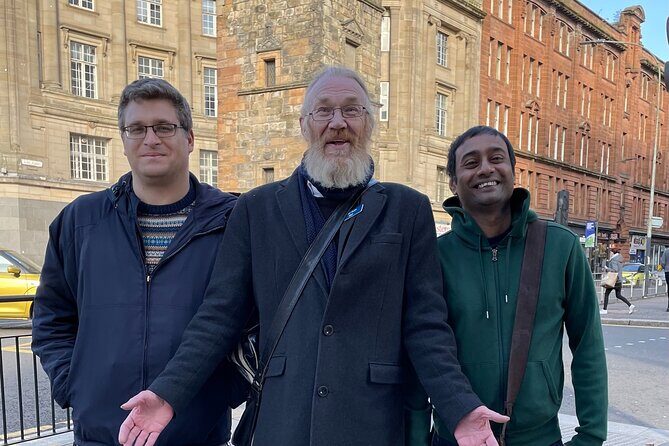
- Actor-guides with character: expect performance-style storytelling, not just facts on repeat
- Small group size (max 12): easier to hear, ask questions, and keep your pace
- Free admission at every main stop: City Chambers, Gallery of Modern Art, George Square areas, and more
- A clean, central route: you finish near Glasgow Cathedral, ready to explore on your own
- Clear pacing with real guidance: you get bearings plus practical context for the rest of your day
Why an actor-led walk is a smart way to start in Glasgow
Glasgow can feel like it has layers on layers. You’ve got grand buildings, industrial-era power, and civic spaces packed with statues. The best way to handle that without getting overwhelmed is a guide who can turn the highlights into a storyline you can remember.
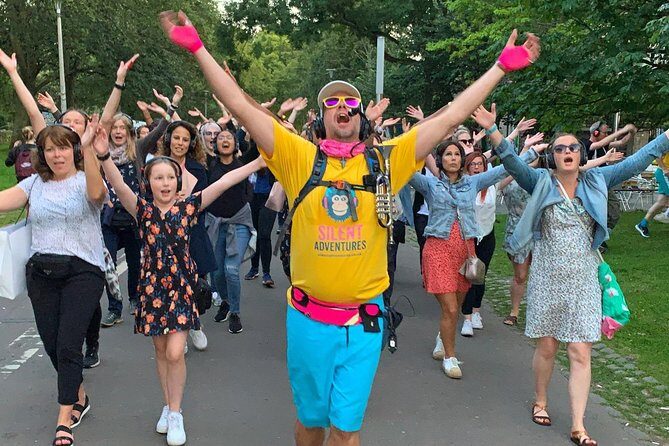
That’s where the actor format helps. Names like Gordon Hart, Ian, Luke, Martin, and Marty show up in the guides you might get, and the common thread is delivery: friendly, funny, and clear. Instead of dragging you through endless stops, they steer your attention. You learn what you’re looking at while you’re still in front of it, so the city sticks in your mind.
This is also a good “first day” plan. The tour is made for people who want to see the center, understand the big eras, and then know where to go next on foot or by transit.
Other Glasgow city walking tours we've reviewed in Glasgow

Price and what you really get for about $23
At around $23.61 per person for roughly two hours, the value is strong because of one detail that matters: you’re paying for a guided route, and the major stops are covered with free admission tickets.
Here’s what you’re getting inside that price:
- A guided walk through central Glasgow highlights
- Local taxes included
- Free-entry access during the tour at the featured sights
What you should budget separately:
- Bottled water
- Coffee or tea
So the “cheap” part isn’t really that you’re cutting corners. It’s that the structure is designed so your money goes to your guide and your time, not to entry fees. That’s a good deal in a city where historic sites can add up quickly.
Meeting point and the pace of the route (two hours, five stops)
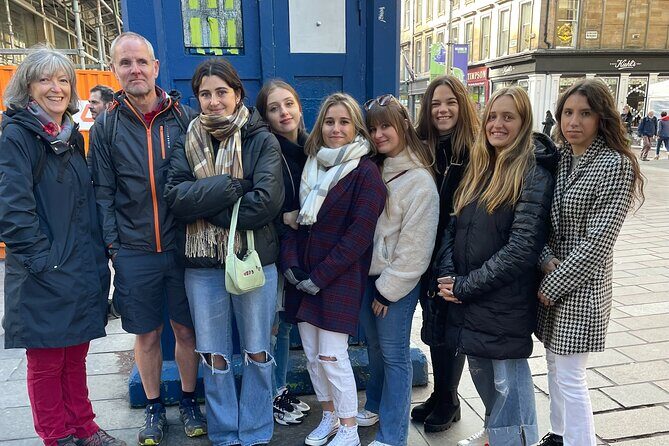
The tour starts at 10:30 am in central Glasgow, and it ends near Mercat Cross on High Street (G1 5AA). That finish point is useful because it keeps you in the medieval core, where you can wander next without needing a second plan.
The walking time is compact. Each stop is about 10 minutes for the first four, then around 20 minutes at the cathedral. In other words: you get enough time to look closely and absorb the story, but you’re not stuck waiting for long explanations.
One practical tip: come with rain-ready clothing if your day looks sketchy. The tour requires good weather, and although guides may manage minor weather changes, you’ll be happier if you’re comfortable outdoors.
City Chambers: marble stairs, film sets, and why it matters
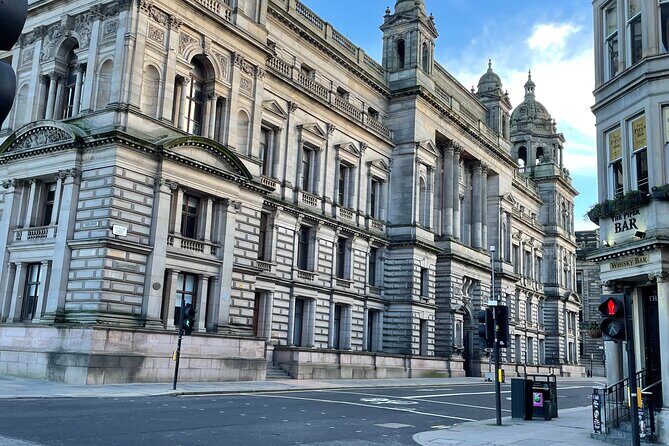
Your first big anchor is City Chambers. The building is described as one of Europe’s most magnificent municipal structures, especially remarkable for its marble staircase, said to be the largest in Europe.
What makes this stop more than pretty architecture is that it’s a civic symbol. You’re seeing how Glasgow wanted to project confidence in its own future. The guide connects the grandeur to the city’s identity, not just the aesthetics.
There’s also a fun pop-culture angle that helps you remember details: the building has been used as a film set and is linked with productions like Indiana Jones and Dial of Destiny, The Buccaneers, and World War Z. That matters because it turns a first glance into a “wait, I’ve seen this” moment.
Practical considerations:
- Ten minutes is tight, but the focus helps. You’ll know where to look.
- It’s usually easy to take photos here, but be ready for foot traffic around a major public building.
Gallery of Modern Art and the Duke of Wellington Conehead
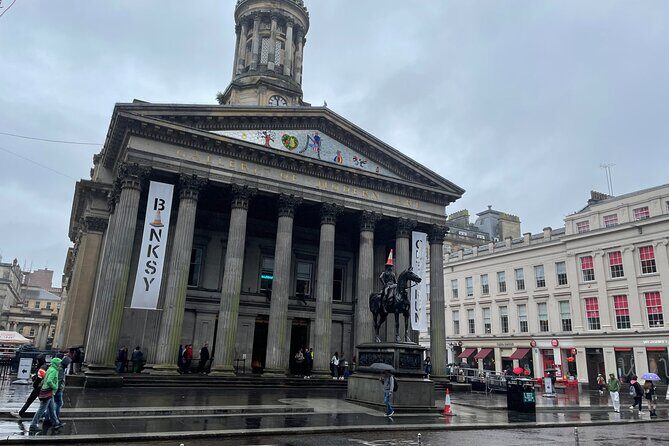
Next is the Gallery of Modern Art, which sits under the watch of a famous nearby figure: the statue nicknamed Conehead, featuring the Duke of Wellington.
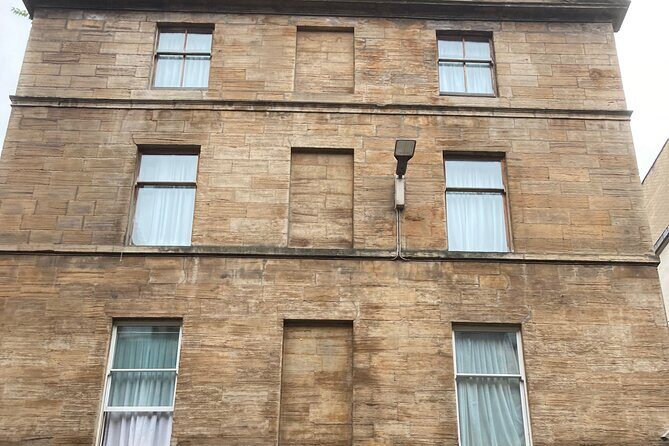
This stop has two jobs at once. First, it teaches you what the building has been over time. It started life as a private house, then took on major public and commercial uses, including roles tied to the Stock Exchange and later as a library. Second, the guide explains the statue and why that particular style of humor exists here.
If you’re curious about the city’s character, this is a strong place to start. It’s not all heavy monuments. You get quirky and memorable. That’s exactly what you want in a short orientation tour—something visual you can carry with you later.
A drawback to note: because the time is brief, you won’t get a full art museum experience. This is more about context and key exterior details than a deep museum visit.
Other walking tours we've reviewed in Glasgow





George Square: statues that tell empire, science, and power
At George Square, the story shifts from individual buildings to a whole public “gallery” of figures. The square is known for having over 14 famous statues, representing Scottish and British Empire history.
The guide’s job here is to help you read what you’re seeing. You don’t just notice bronze or stone people. You learn how the choices reflect what the city wanted to highlight—writers, scientists, and other historical figures, including less celebrated characters and surprising, amusing details.
One comment that sticks: the gender imbalance. There’s only one woman among those statue selections, which makes the statue lineup feel like a snapshot of how authority was defined.
Practical tip for you:
- Look up and scan the full square before you pick a statue to linger on. Once you know what the guide is pointing out, you’ll be able to make faster sense of the rest.
Merchant City: port power, workhouse roots, and big industrial turns
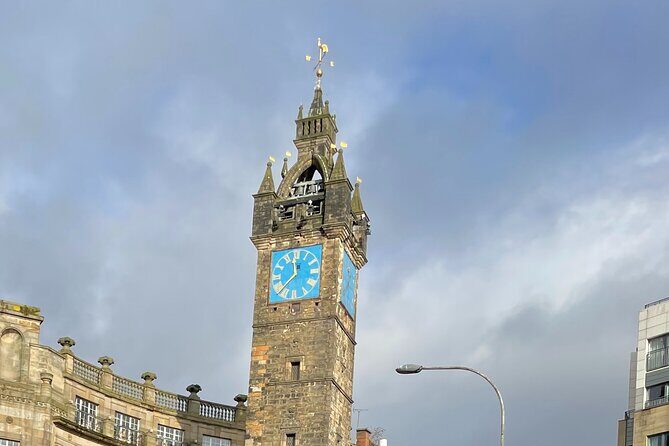
From civic grandeur, the tour moves into the heart of old economic muscle: Merchant City. This is where Glasgow’s power is described as having begun, tied to trade and shipbuilding—an era when the port and shipyards helped drive the city’s fortunes.
The wording used for this area emphasizes how central it was to the British Empire’s commercial engine. There’s also a darker edge in the story: the mention of workhouse connections to imperial Britain. That’s important context, because it gives you more than a postcard version of history.
This stop is also where guides tend to add colorful side stories. In the accounts of guides like Gordon Hart and Marty, you can see themes that go beyond dates—tobacco barons, witch trials, and long-running local rivalries show up as part of how the city narrated itself over time.
What to expect from you at this point:
- Your eyes will look for the physical “proof” of history, but the story is the real payoff.
- You’ll leave with a better sense of why Glasgow developed the way it did—and why some buildings and street layouts feel built for commerce first.
Glasgow Cathedral: Scotland’s only extant cathedral and a good finish
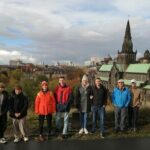
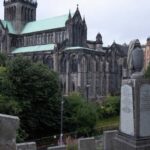
The final stop is Glasgow Cathedral, identified as Scotland’s only extant cathedral. That phrase matters. It signals you’re standing in something rare and surviving, not a repurposed shell.
The tour ends close to the entrance, so you can switch from guided orientation to your own pace. Around 20 minutes is allocated here, which is enough time to absorb the main points and decide whether you want to stay longer.
Why this makes a satisfying ending:
- You finish with something you can keep visiting after the guide leaves.
- The story closes the loop from industry and civic power back to a defining historic landmark.
- It feels natural to turn your walk into a longer wander in the cathedral area.
If you’re the type who likes to linger in religious architecture, you’ll enjoy this segment. If you’re more photo-and-move, you’ll still get the context fast and then head off.
What I’d do after the tour (so you don’t waste the time you paid for)
This tour ends near the medieval city core at Glasgow Cross / Mercat Cross, which is exactly where you want to be if you like walking on your own.
Here are smart ways to build on it:
- Pick one direction and walk without checking your map for a while. You’ll be surprised how quickly your bearings improve after a guide points out the city’s logic.
- Use the guide’s practical tips for eating. Some guides, including Gordon Hart in at least one account, were noted for sharing restaurant guidance that fit reasonable budgets. Even if you only use one recommendation, it can save you stress later.
- If the weather turns, don’t panic. The tour format is short enough that you can pivot to a café or shop nearby and come back to sightseeing when it steadies.
Who this tour fits best (and who should skip it)
This is a great fit if:
- You’re in Glasgow for the first time and want a fast orientation
- You like stories told with personality, not just dates read off a chart
- You want a compact route that covers the big central sights
- You appreciate small groups (this one tops out at 12 people)
You might consider skipping if:
- You want long, sit-down museum time at each stop
- You dislike weather-dependent outdoor walking
- You’re looking for very detailed stop-by-stop deep dives, because each location is brief by design
Should you book this Glasgow walking tour?
I’d book it if your goal is to understand the city quickly and see the highlights without paying extra entry fees. The value is in the combination: short duration, free admission at the main stops, and guide-led storytelling that makes the center feel connected.
If you’re deciding between doing nothing and taking one “orientation” activity, this beats wandering blindly. You’ll leave with mental bookmarks—City Chambers, the Conehead/Duke of Wellington angle, George Square’s statue lineup, Merchant City’s trade roots, and Glasgow Cathedral to end it cleanly.
And if you’re the kind of traveler who loves a good character guide, this actor format is exactly the right match.
FAQ
How long is the walking tour of Glasgow?
The tour lasts about 2 hours.
How much does the tour cost?
It costs $23.61 per person.
What language is the tour offered in?
The tour is offered in English.
Is admission included for the stops?
Yes—admission tickets for the featured stops are listed as free during the tour.
Where does the tour start and end?
It starts at 9C7QVQ62+C4MVQ62+C4M Glasgow, UK and ends near Mercat Cross, High St, Glasgow G1 5AA.
What time does the tour begin?
The start time is 10:30 am.
How big is the group?
The tour has a maximum of 12 travelers.
What should I bring since bottled water and coffee are not included?
Bring your own water if you want it, and plan for coffee/tea purchases on your own.
What happens if the weather is poor?
The tour requires good weather. If it’s canceled due to poor weather, you’ll be offered a different date or a full refund.
Can I get a full refund if I cancel?
Free cancellation is available. You must cancel at least 24 hours before the experience’s start time for a full refund.