REVIEW · GLASGOW
Glasgow Must-See Attractions Walking Tour with A Guide
Book on Viator →Operated by Guydeez · Bookable on Viator
Three hours and you get the city’s main story. This guided walk strings together Glasgow’s big-name landmarks with real-life context, so the map in your head clicks fast. I like the way it starts at George Square and then moves into Glasgow Cathedral before your feet get tired, and I also like how guides often tailor the pace and topics.
I also like that you cover both grand architecture and everyday Glasgow places, like People’s Palace and Winter Gardens and the River Clyde waterfront. In the strongest guide experiences, the tour feels like a local walk through the city’s choices, not a recitation of facts.
One caution: it is a walking tour with quick stops, so if you prefer slow museum time, you may feel it’s lots of walking with limited lingering. It’s also described as a city tour rather than a long, inside-monument deep visit.
In This Review
- Key highlights worth knowing
- Why This Glasgow Route Fits a First-Time Visit
- George Square: Your Starting Line in Glasgow’s Civic Center
- Glasgow Cathedral: Medieval Stonework You Can Step Into
- The Necropolis: A Cemetery Walk With Big City Views
- Merchant City: Cobblestones, Shops, and Street-Scene Energy
- Tolbooth Steeple: The Clock Tower With a Prison and Court Past
- St Andrews In The Square: A Restored Church Turned Venue
- People’s Palace and Winter Gardens: Social History Meets Glasshouse Views
- Walking the River Clyde: Views, Bridges, and Trade-to-Now Transitions
- Buchanan Street: Shopping Street and Easy People-Watching
- Glasgow Green: Ending at the City’s Oldest Public Park
- Price and Value: What $62.71 Gets You in Real Terms
- The Guide Factor: Why People Like Keith and Gary So Much
- Group Size, Private Format, and Languages
- Who This Tour Suits Best
- Should You Book This Glasgow Walking Tour?
- FAQ
- How long is the Glasgow walking tour?
- Where does the tour start and end?
- Is this a private tour?
- What language is the guide available in?
- Are tickets included for the stops?
- What’s included in the price?
- What’s not included?
- Do we go inside the monuments and museums?
- Can I cancel for free?
Key highlights worth knowing
- 18-minute stop rhythm keeps the tour moving and helps you see a lot without long waits
- Free admission options at the stops listed makes it easier to keep costs down on the ground
- Guides like Keith MacKenzie and Gary are praised for storytelling and answering questions clearly
- River Clyde views and skyline angles show Glasgow beyond just streets and buildings
- People’s Palace + Winter Gardens adds interactive social history plus glasshouse sights in one hit
- Private tour format means your group stays together (and the guide can adjust to your interests)
Why This Glasgow Route Fits a First-Time Visit
This tour is built for orientation. In about three hours, you get a tight loop through civic Glasgow, medieval landmarks, a major cemetery viewpoint, a city-center shopping street, and the parkland that locals use as an everyday escape.
You’re not meant to master every neighborhood. You’re meant to start understanding them—how Glasgow looks, how it used to function, and where today’s energy shows up.
The value comes from how the stops are chosen. You get variety without hopping on and off transit for every turn, and the “quick look” format keeps momentum so you’re not stuck in one place too long.
Other Glasgow city walking tours we've reviewed in Glasgow

George Square: Your Starting Line in Glasgow’s Civic Center
You begin at George Square, Glasgow’s civic heart and a natural place to orient yourself. Expect statues, monuments, and the kind of open space that makes the city feel like it has a “center of gravity.”
I like starting here because it gives you landmarks that are easy to find again later. Even if you only remember one thing from the tour, George Square helps you anchor the rest of your day.
This is also a good warm-up stop: you’re moving, people are around, and your guide can set the tone before the tour turns more “history” and less “streets.”
Glasgow Cathedral: Medieval Stonework You Can Step Into
From civic Glasgow to medieval Glasgow, the next stop is Glasgow Cathedral. The focus here is the architecture: soaring arches, stained glass windows, and intricate stone carvings.
If you enjoy churches mainly as buildings (not just for worship), you’ll likely get a lot out of this. Even with a short visit, cathedral details are the type you can notice quickly once you know what to look for.
The practical upside: the stop is listed with free admission and a short time block, so you can see the space without losing half your afternoon to logistics.
The tradeoff: because the tour moves on after about 18 minutes, you won’t get a slow, hour-long architectural study. You’ll need to treat this as a highlight stop, not a full immersion.
The Necropolis: A Cemetery Walk With Big City Views
Then it’s up and out to the Glasgow Necropolis, a cemetery overlooking the skyline. It feels atmospheric—ornate tombs, winding paths, and stories tied to notable people buried there.
This is one of those Glasgow stops that changes your understanding of the city. Cemeteries here aren’t just background—they’re part of the city’s visual identity and social memory.
What I like is that a guide can turn “you’re standing next to graves” into “you’re learning how the city remembers itself.” In the stronger guide moments, you’re not just reading names—you’re connecting them to what Glasgow became.
A consideration: cemeteries are often quieter and more spread out than major squares. If the weather is poor, wear shoes that handle uneven ground.
Merchant City: Cobblestones, Shops, and Street-Scene Energy
After the Necropolis, you transition into Merchant City, known for stylish boutiques, art galleries, and cultural venues. Expect cobblestone streets, historic building fronts, and street art.
This portion works well if you like contrast. You’ve just been in a solemn place; now you’re in a neighborhood where creative energy and commerce sit side-by-side.
Merchant City is also a good “reset.” The architecture is still there, but the feeling is more casual—good for photos, quick observations, and deciding what you’d like to return to later.
One drawback to keep in mind: if you’re hoping for major interior stops here, the format is still a city tour. You’ll likely do more looking and less “time inside a gallery.”
Other walking tours we've reviewed in Glasgow





Tolbooth Steeple: The Clock Tower With a Prison and Court Past
Tolbooth Steeple is a 17th-century landmark with a clock tower and a complicated past—once used as a prison and courthouse. Even from the outside, it gives you a strong Glasgow “justice and power” angle.
I like landmarks like this because they connect architecture to real civic function. You’re not just seeing a tower—you’re learning why that tower mattered to the city’s workings.
Photo-wise, it’s a clear target against the skyline. If you’re the kind of traveler who likes one or two great photos per neighborhood, you’ll probably enjoy this stop.
St Andrews In The Square: A Restored Church Turned Venue
Next comes St Andrews In The Square, described as a beautifully restored church-turned-venue. It hosts concerts and cultural performances, and the Georgian architecture and courtyard are part of the appeal.
This stop offers a calmer pocket inside the tour loop. The setting can feel like a breather between busier streets, especially if your day starts to feel like a string of “look, move, look, move.”
If you happen to be in Glasgow during an event window, this is the kind of place you might want to remember for a future evening—because the building is clearly still alive with programming.
Time is short here, so treat it as a highlight and use it to decide if you want to come back.
People’s Palace and Winter Gardens: Social History Meets Glasshouse Views
People’s Palace and Winter Gardens is where the tour earns extra points for variety. You get social history, interactive-style exhibits, tropical gardens, and Victorian glasshouses.
This is also where the guided storytelling can really help. Glasgow’s working-class heritage isn’t just a timeline—if your guide connects it to daily life and city changes, the stop stops feeling like a lecture and starts feeling like understanding.
In several guide-praise comments, people highlighted how guides explained local life and history, and this stop is the one where that approach tends to land best. It gives your guide a lot of material without requiring long inside time.
Practical consideration: glasshouses and garden areas can be cooler or change in light quickly. Bring layers you can handle even if the weather shifts.
Walking the River Clyde: Views, Bridges, and Trade-to-Now Transitions
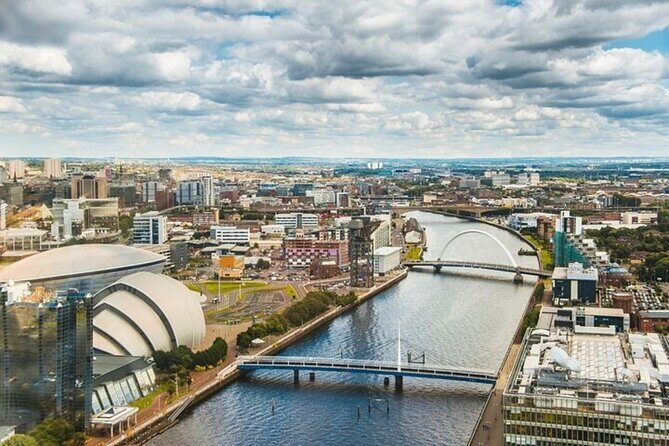
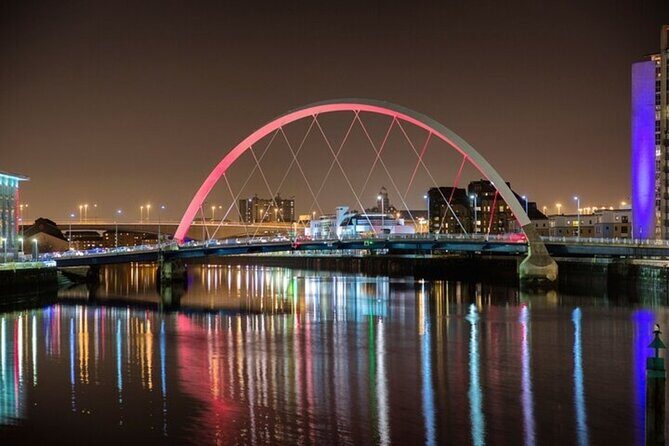
The route then follows the River Clyde, a key waterway that shaped Glasgow’s development. You’ll see modern bridges and waterfront developments plus panoramic skyline views.
This is a smart move because river walks let you see the city in scale. Streets alone can make cities feel like blocks; the river gives you the bigger picture.
The Clyde portion is also where you can take a quick breath and reset your feet. It’s not “hiking,” but it breaks the pattern of straight-line street stops.
If you like photography, try to look for the skyline angles and bridge silhouettes. They tend to be the kind of shots that make people realize Glasgow is more than its buildings.
Buchanan Street: Shopping Street and Easy People-Watching
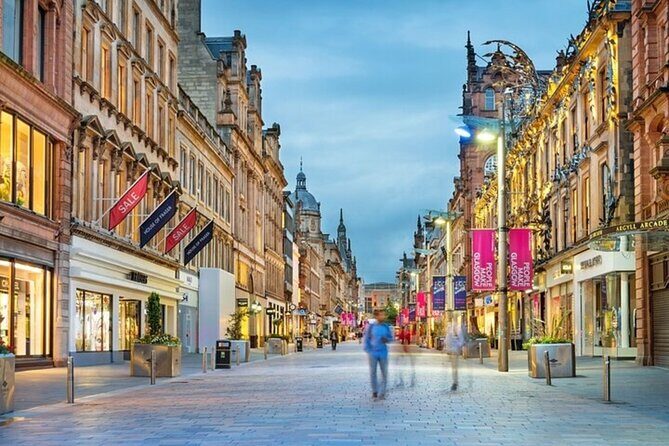
Buchanan Street is Glasgow’s premier shopping thoroughfare, with upscale shops, department stores, and lively cafes. This stop is less about monuments and more about atmosphere.
I like this part because it’s practical. After history and architecture, you get a place where you can keep moving independently—grab a snack, browse for a bit, or simply watch the flow of people.
It’s also an easy place to connect your tour to the rest of your day. If you want a souvenir stop or you’re hungry soon, this is where you’ll feel “ready” for it.
If you’re not into shopping, you can still enjoy the street energy. It’s a good place to be a spectator for 15–20 minutes.
Glasgow Green: Ending at the City’s Oldest Public Park
The final stop is Glasgow Green, the city’s oldest public park. Expect scenic paths, historic monuments, and recreational space.
This is a strong ending because it brings you back to the “where locals go” side of Glasgow. After cathedral stone, cemetery architecture, and shopping streets, a park gives you a different kind of information: how the city relaxes.
Also, it links nicely with nearby landmarks from earlier—especially since People’s Palace and Winter Gardens sit in this broader area on the route.
If your feet feel heavy by the end, that’s normal. Parks are forgiving. You can slow down, take a minute, and let the day’s sights settle in.
Price and Value: What $62.71 Gets You in Real Terms
At $62.71 per person for about three hours, the tour sits in the “solid city experience” range. The main value isn’t just the price—it’s what you’re not paying extra for during the stops.
The tour information lists free admission for each stop, and it also includes help from the team to book tickets for desired visits. That matters if you’re the type who doesn’t want to troubleshoot ticket queues mid-walk.
You also get a guide in-person and the private tour format for your group. Reviews strongly suggest that the guide can make or break the experience, so you’re essentially paying for a person to connect the sites into a story.
The biggest value-question: will you enjoy a fast-moving route? If you like lots of stops and short explanation bursts, it’s a good match. If you prefer fewer places with longer, deeper time inside, you may want to plan additional standalone visits.
The Guide Factor: Why People Like Keith and Gary So Much
The strongest feedback points are about the guide. People mention names like Keith MacKenzie and Gary, praising local storytelling, friendliness, and clear answers to questions.
One detail that sticks out: some guides went beyond the 3-hour window and handled extra time smoothly. There are also comments about guides tailoring the tour to interests and adjusting the pace when needed.
That tailoring is important for a tour like this. With ten stops in about three hours, there’s simply not time for every topic to get equal weight. A good guide figures out what your group cares about and steers the stories that way.
If you end up with a guide who mainly walks you from spot to spot, you’ll likely feel like you could have done it alone with a map. Since you can choose your interests beforehand, make that part of your prep. Ask for the angle you want—architecture, local life, civic history, or a mix.
Group Size, Private Format, and Languages
This is offered as a walking tour with a private option or small group option. It’s described as private, meaning only your group participates, with a minimum of 2 participants required for the group option.
The guide languages listed include English, Spanish, French, and Italian. If you want history explained clearly (and not just read off plaques), having a guide in your preferred language is a real quality-of-life upgrade.
It’s also noted that it’s near public transportation, so you can pair it with the rest of your Glasgow day without stress.
Who This Tour Suits Best
You’ll likely enjoy this tour if you want:
- a fast first sweep of central Glasgow
- a guide-led route with free admission stops
- a mix of architecture, city life context, and a bit of nature at the end
- a group experience where your guide can answer questions
It may not be your best match if you:
- hate walking and prefer long sit-down museum time
- want a lot of interior time in buildings beyond what fits in short stops
- expect every stop to be a deep, detailed lesson on its own
Should You Book This Glasgow Walking Tour?
Yes, if you want a smart overview route and you value a guide who can turn buildings into stories. The combination of George Square, Glasgow Cathedral, the Necropolis, and the River Clyde gives you a good spread of Glasgow’s faces without turning your day into a transit puzzle.
I’d especially book it if you know you’ll benefit from explanations and you’re okay with a quick pace. When the guide is strong—and several named guides in feedback get praised for it—the tour feels like an inside guide to how the city works and why those landmarks matter.
If your travel style is slow and you want long interior time, consider pairing this with one “anchor” attraction you’ll visit again on your own. Use this tour to pick what you want to return to, then go back when you have more time.
FAQ
How long is the Glasgow walking tour?
The tour runs for about 3 hours.
Where does the tour start and end?
It starts at George Square, Glasgow G1, UK, and ends back at the meeting point.
Is this a private tour?
It’s offered as a private tour/activity, meaning only your group participates. A small group option exists with a minimum of 2 participants.
What language is the guide available in?
The tour is offered with an in-person guide speaking English, Spanish, French, or Italian.
Are tickets included for the stops?
The listed stops show free admission, and the tour also includes help from the team to book tickets for the desired visits. Entry to monuments and museums beyond what’s covered is listed as not included.
What’s included in the price?
Included items are the walking tour, in-person guide (with the listed languages), help booking tickets, and a mobile ticket.
What’s not included?
Tips are optional. Food and drink aren’t included, and you pay for public transport if you use it during the tour. Entry to monuments and museums is also listed as not included.
Do we go inside the monuments and museums?
It’s described as a city tour rather than a tour inside the monuments, so expect mostly stop visits and viewing rather than long museum-style time.
Can I cancel for free?
Yes. Free cancellation is available if you cancel up to 24 hours in advance for a full refund.