Ready for a laugh with the dead? Glasgow Ghouls, Ghosts and Gruesome Tales turns central Glasgow landmarks into a two-hour story walk where the spooky bits meet real street-level sites. You’ll even have chances to spot street murals, so the city feels more than just a backdrop.
I really like the comedian guide style, with humor that keeps the mood light without skipping the facts. And since the stops list admission as free, you’re paying mainly for the storytelling, tablet references, and the guide’s time.
One thing to plan for is the good-weather requirement. This is mostly an evening outdoors, so a rainy night can change your plans.
In This Review
- Key highlights you’ll care about
- Where the tour starts and how the route feels in real life
- How the tour works: mobile ticket, tablet references, and a comedian guide
- Stop 1: Ramshorn Graveyard and the case of Mrs Janet McAllister
- Stop 2: Tron Theatre and why the back two rows matter
- Stop 3: Tolbooth Steeple, witches in the clocktower, and public hangings
- Stop 4: University of Strathclyde and science fiction that starts with a doctor
- Stop 5: Friends Of Glasgow Royal Infirmary Museum and the darker side of medicine
- Stop 6: Glasgow Cathedral and the secrets in the crypt
- Stop 7: The Necropolis and its statues, stories, and bloodsucker legend
- Stop 8: Cathedral House Hotel, the most haunted hotel in Scotland, and the top-floor warning
- Stop 9: Babbity Bowster and the spirits at the pub finale
- Price and value: is $22.10 a fair deal for two spooky hours?
- Who this Glasgow ghost tour is best for
- Should you book Glasgow Ghouls?
- FAQ
- How long is the Glasgow Ghouls, Ghosts and Gruesome Tales tour?
- What is the price of the tour?
- What language is the tour offered in?
- Does the tour include entrance fees for the stops?
- Where do I meet the tour, and where does it end?
- Is transport to and from the tour included?
- How many people are in a group?
- Is the tour weather-dependent?
- Can I cancel for free?
Key highlights you’ll care about
- Comedian-led ghost stories that stay fun, not grim
- Free admission at every featured stop, so you don’t add extra entry fees
- Tablet references that help you follow the tales as you walk
- Iconic Glasgow stops from Glasgow Cathedral to the Necropolis and a famously spooky hotel
- A manageable pace, with short stops that fit an early evening outing
Where the tour starts and how the route feels in real life
Your walk begins at Glasgow Cathedral (Castle St, Glasgow G4 0QZ) and ends at Babbity Bowster (16-18 Blackfriars St, Glasgow G1 1PE). That matters because it’s not just a random loop of dark alleys. It’s a straight shot through major, easy-to-find sights in the city center, with a pub finale that’s close to where you’ll likely want food or a drink next.
The duration is about 2 hours, and each stop is designed as a quick hit (around 10 minutes). In practice, that means you get a lot of variety without a long, exhausting trudge. You’ll still want comfy shoes and a light layer, because Glasgow evenings can feel colder than you expect, even when it’s not freezing.
Other ghost and haunted tours we've reviewed in Glasgow
How the tour works: mobile ticket, tablet references, and a comedian guide
This is a small-group experience capped at 25 people, which is a sweet spot for a storytelling tour. You’re close enough to hear clearly, and the guide can actually interact with the group instead of just blasting a script into the dark.
Your ticket is mobile, and you’ll use tablet references during the walk. That’s a real help on a ghost tour, because it keeps the stories from feeling like vague campfire talk. You get prompts and context on the spot, which makes the myths easier to picture.
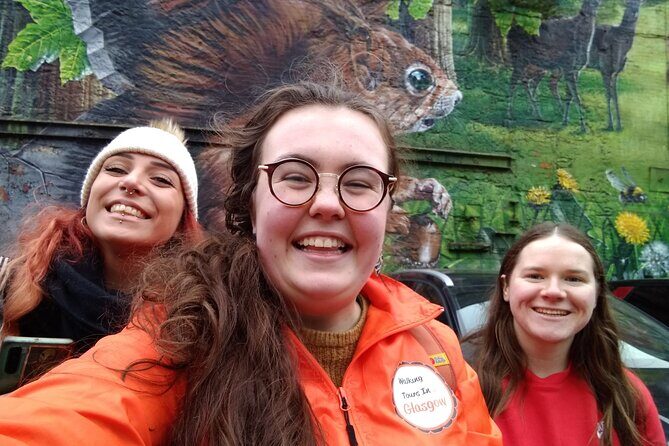
The guide leads the whole show, with a comedian tone. In the reviews, guides named Richard and Mark come up often, and the common thread is active engagement and strong delivery. You can expect the kind of humor that makes the group laugh together while you’re standing in front of places that look like they’ve seen everything.
Stop 1: Ramshorn Graveyard and the case of Mrs Janet McAllister
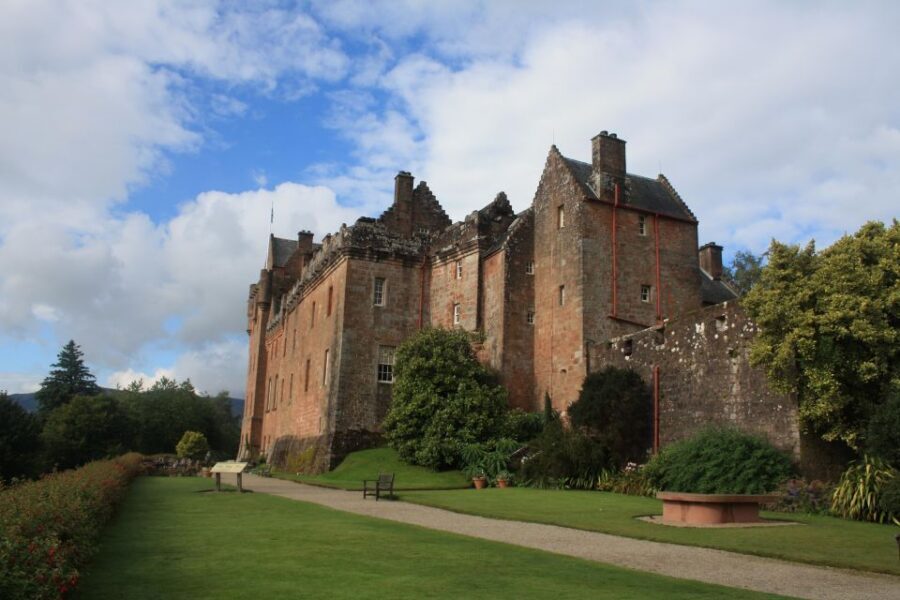
The first stop is Ramshorn Graveyard, beside a church that was built in 1824. The church itself has a past that surprises people: it was converted into a theatre in the 1980s, which gives this stop a mix of quiet and performance energy.
But the real hook is the graveyard’s link to one of the stranger graverobbing cases in Scottish history: Mrs Janet McAllister and her missing bones. It’s a reminder that the spooky stuff isn’t always magic. Sometimes it’s human greed, fear, and the dark side of science and medicine in earlier centuries.
What I like about this opening is how it sets the tour’s tone. You’re not thrown into a jump-scare. You’re guided into the idea that places hold stories for both reasons: the official history, and the darker rumors that people built around it.
Stop 2: Tron Theatre and why the back two rows matter
Next up is Tron Theatre, a building that started life as a church way back in 1523, before becoming a theatre. That old-church-to-stage transformation is perfect for this kind of tour, because it creates a natural tension between sacred space and entertainment space.
This is also where you’ll hear ghost lore tied to the building’s layout and atmosphere. The story point is very specific: the back two rows of the auditorium are where the guide says you shouldn’t spend too long alone. Even if you don’t buy the supernatural angle, it’s a great prompt to think about sound, sightlines, and why certain spaces feel creepier.
One more highlight here: the tour talks about the UK’s oldest surviving music-hall connection. The value isn’t just bragging rights. It’s that you’re learning the building’s cultural role in Glasgow, not only its spooky reputation.
Stop 3: Tolbooth Steeple, witches in the clocktower, and public hangings
Tolbooth Steeple is the stop that feels most like a time capsule. The structure has been part of Glasgow architecture since the 1600s, and it carries stories tied to the clocktower cells and the punishment era.
Witches were held in cells in the clocktower, and the tour explains that dozens of people met their end by hanging in front of the tower. That’s heavy material, and the comedian tone doesn’t erase the grim facts. Instead, it helps you hold both ideas at once: the place is beautiful, but the past behind it wasn’t.
Practical tip: this is a good stop for slow listening. Stand where the guide is talking and take in the tower details. When you can “see the shape” of a building, you understand better why those stories stuck.



Stop 4: University of Strathclyde and science fiction that starts with a doctor
At the University of Strathclyde stop, you’re standing near the former University of Glasgow annex. The story focus is about a doctor whose ideas may have inspired what’s described as the first science fiction story ever written.
That’s a smart pivot for this tour, because it expands beyond just ghosts. It brings in the way early science and speculative thinking lived side by side with fear of what people didn’t understand yet. And the ghost element is framed as something like unfinished business, with the tale that the dead don’t always stay where they should.
If you like history that links to ideas (medicine, imagination, publishing, invention), this is one of the more satisfying stops. It makes the supernatural feel like an old metaphor people used to explain uncertainty.
Stop 5: Friends Of Glasgow Royal Infirmary Museum and the darker side of medicine
This stop is at the Friends Of Glasgow Royal Infirmary Museum, described as a pre-Victorian hospital. That time period alone adds texture: you’re not just hearing about spooky legends, you’re hearing about how hospitals operated before modern expectations of care.
The guide’s story point involves a famous medical-history name and a frightening discovery. It also includes the chilling idea that some patients never checked out, even after they passed away.
What you should watch for at this stop is how the tour handles tone. Medical history can be unsettling on its own, and a ghost tour can go too far into sensationalism. Here, the best part is that the fear is anchored to place and to the real constraints of earlier healthcare, not just theatrical horror.
Stop 6: Glasgow Cathedral and the secrets in the crypt
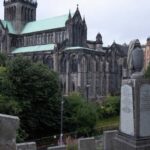
Glasgow Cathedral is the tour’s anchor building. It’s described as Glasgow’s oldest building, and it’s where the stories shift into architecture and sacred space.
The tale focus is especially on the crypt and on strange secrets in the walls. You also get stories tied to the beautiful but spooky graveyard nearby, so you’re not only inside the building—you’re absorbing the cathedral’s role as a long-term resting place and a long-term symbol.
This stop works well because cathedral spaces naturally amplify sound and shadow. Even if you treat the ghost claims as myth, the setting makes you pay attention to details. That’s what turns a walk into an experience.
Stop 7: The Necropolis and its statues, stories, and bloodsucker legend
The walk continues to the Necropolis, a 19th-century cemetery that’s described as a jewel of Glasgow. This isn’t a quick photo stop. It’s built for storytelling.
You’ll hear about haunted statues, spooky encounters, and a mention of a real-life bloodsucker. That word signals the kind of folklore you’re stepping into, but the point for you is how the tour ties legend to a specific place people actually walk among.
If you’re the type who gets spooked easily, this is one of the stops where you’ll feel the atmosphere most. It’s also a good moment to remember the tour’s overall balance: humor is present, but it doesn’t flatten the setting.
Stop 8: Cathedral House Hotel, the most haunted hotel in Scotland, and the top-floor warning
Now you’re at Cathedral House Hotel, billed as apparently the most haunted hotel in Scotland. The guide’s advice is very practical, and very funny in that dark-way: you should consider asking for a room below the top floor, just in case.
This stop is a neat shift from cemeteries and crypts to everyday life. You’re basically looking at how ghost stories move through normal routines: where people sleep, where people gather, and how buildings get reputations over time.
Even if you’re not planning to stay overnight, this is useful. It shows how legends attach to hospitality spaces and how those reputations become part of a city’s identity.
Stop 9: Babbity Bowster and the spirits at the pub finale
You finish at Babbity Bowster Bar/Restaurant/Hôtel. The tour leans into the idea that this pub is very open about having no ghosts, but they definitely have spirits—meaning the emotional kind and the drink kind.
This finale is more than a place to end. It’s a decompression moment after crypts, cells, and hangings. One of the best parts of doing a tour like this is the social contrast: the stories stay intense, and then the pub brings it back to human scale.
If you’re hungry, this is where you can keep the evening going. If you just want a quick pint and head out, it still works, since the end point is in the same central area.
Price and value: is $22.10 a fair deal for two spooky hours?
At $22.10 per person for about 2 hours, the value is strong for a few reasons you can use to decide quickly:
- Admission is listed as free at the stops (so you’re not paying separate entrance fees on top).
- The tour includes a guide and tablet references, which is more than just a self-guided walk.
- You get a full city-center route across multiple kinds of landmarks, not one single building tour stretched too long.
- The group cap of 25 people helps the experience stay personal and interactive.
What could make it feel less worth it is if you hate humorous storytelling, or if you want a strictly factual history walk with no legend layer. This one is built to mix fact and folklore with a comedian tone. If that’s your style, the price feels like it fits.
Also, it’s commonly booked about 27 days in advance on average. That’s a hint the timing can fill up around popular evenings, so booking earlier is a smart move.
Who this Glasgow ghost tour is best for
This tour is a great fit if you want:
- a fun evening introduction to Glasgow’s darker side without it dragging on
- ghost stories that stay connected to specific buildings
- a group experience where the guide works the conversation and even remembers people
It’s also a good option if you’re already doing the “big” sights and you want one more layer of atmosphere. Cathedral, crypts, and cemeteries give you the spooky feel. Theatre and the infirmary add variety beyond tombs. The hotel and pub finish keeps it from becoming one long mood.
You should have moderate physical fitness, since you’re walking between stops, even though each one is short.
Service animals are allowed, and it’s near public transportation, which helps if you’re coming in from elsewhere in the city.
Should you book Glasgow Ghouls?
Yes, I’d book it if you want a two-hour Glasgow ghost walk that’s funny, scene-based, and easy to follow. The biggest wins are the mix of major landmarks (Cathedral, Necropolis, Tron Theatre) plus the clear storytelling structure with tablet references and a comedian guide.
Skip it only if you want purely academic history or you’re uncomfortable with spooky folklore themes. If you’re happy to let legends sit right next to real architecture and real events, this is the kind of night outing that makes the city feel personal fast.
FAQ
How long is the Glasgow Ghouls, Ghosts and Gruesome Tales tour?
The tour lasts about 2 hours.
What is the price of the tour?
It costs $22.10 per person.
What language is the tour offered in?
The tour is offered in English.
Does the tour include entrance fees for the stops?
The stops listed on the route show admission ticket free, and the included items are the guide plus tablet references.
Where do I meet the tour, and where does it end?
You meet at Glasgow Cathedral, Castle St, Glasgow G4 0QZ, and the tour ends at Babbity Bowster, 16-18 Blackfriars St, Glasgow G1 1PE.
Is transport to and from the tour included?
No. Transport to and from the tour is not included.
How many people are in a group?
The tour has a maximum of 25 people.
Is the tour weather-dependent?
Yes. It requires good weather, and if it’s canceled due to poor weather you’ll be offered a different date or a full refund.
Can I cancel for free?
Yes. Free cancellation is available, and you can cancel up to 24 hours in advance for a full refund.