REVIEW · GLASGOW
Shore Excursion f/Greenock: Glasgow, Kelpies, Falkirk Wheel
Book on GetYourGuide →Operated by E2G Tours Ltd · Bookable on GetYourGuide
Two famous canal wonders in one day. The fun is how this trip pairs huge, modern sculpture with real medieval Glasgow, plus smart stops for photos, cathedrals, and museums—all in one 8-hour loop. I love the scale of the Kelpies and the clever engineering of the Falkirk Wheel. One thing to watch: the schedule is full, so you’ll want to decide early if you’ll pay for optional extras like the Kelpies entry and the Falkirk Wheel boat ride.
In practice, the day feels smooth because it’s a private group with an air-conditioned vehicle, bottled water, and Scottish snacks on board. And the guide makes a difference. I’ve seen great results when the tour lands with guides like Joao Madeira, Corrine, or Simon—friendly, flexible, and ready to adjust the pace to your group.
In This Review
- Key Stops That Make This Tour Feel Worth It
- Kelpies and Falkirk Wheel: The Modern Icons First
- Glasgow Cathedral: A Medieval Core That Still Holds
- Necropolis and Provand’s Lordship: Glasgow’s Big “What If” Side
- St Mungo Museum: Religious Life Through Art
- Doulton Fountain and the West End Murals: Glasgow’s Public Art Side
- Glasgow University’s Neo-Gothic Main Building and Kelvingrove’s Museum Mix
- Transport Museum and Glenlee Tall Ship: A Smooth Finish by the Water
- Time, Pace, and Choosing Optional Extras
- Price and Value: What $807 Per Group Actually Buys
- Who This Tour Fits Best
- Should You Book This Glasgow, Kelpies, Falkirk Wheel Excursion?
- FAQ
- How long is the Shore Excursion to Glasgow, Kelpies, and Falkirk Wheel?
- What’s included, and what costs extra?
- Where do pickups and drop-offs happen?
- What languages does the live guide speak?
- Is the tour wheelchair accessible?
- Is free cancellation available?
Key Stops That Make This Tour Feel Worth It
- The Kelpies photo moment: quick, iconic, and built for big-camera results.
- Falkirk Wheel engineering: a rotating boat lift that moves vessels between canals, 115ft up.
- Glasgow Cathedral + guided time: built in the 1100s and still one of the most intact medieval cathedrals on the Scottish mainland.
- Necropolis option: 3,500 tombs, Classical Revival style, modeled on Père-Lachaise in Paris.
- Glasgow University and Kelvingrove in the same stretch: Neo-Gothic architecture plus a Spanish Baroque museum with a restored Spitfire.
Kelpies and Falkirk Wheel: The Modern Icons First
I like starting with the Kelpies for a simple reason: they reset your brain. You’re in Scotland, but you’re staring at the largest equine statues in the world, made to feel powerful and cinematic from almost every angle. On this tour you’ll get a short photo stop plus time to visit, so you’re not wandering for hours trying to find the perfect viewpoint. If you care about photos, bring a charged phone/camera and give yourself a few minutes to walk around—these are sculptural forms, not just a background sign.
Then you jump to the Falkirk Wheel, and that’s where the day turns into engineering class—without the boring parts. This is the world’s first and only rotating boat lift, standing 115ft tall, designed to move boats between two canals. Even if you don’t take the optional boat ride, the structure is the point. You can really see how the canals connect the landscape, and the idea of the wheel doing the heavy lifting becomes easy to picture.
Practical note: because the boat ride is optional, you can choose your risk tolerance. If you want maximum time elsewhere in Glasgow, skip it. If you want the “watch it happen” feeling, add the ride and expect the day to feel a little tighter after.
Other Kelpies and Falkirk Wheel tours we've reviewed in Glasgow

Glasgow Cathedral: A Medieval Core That Still Holds
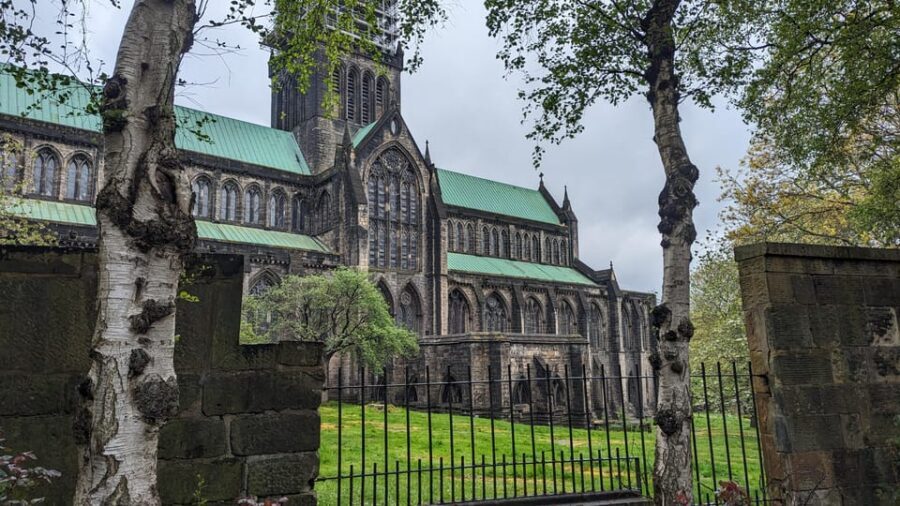
Once you’re back in Glasgow, the tour centers on the city’s older heart. Glasgow Cathedral is built in the 1100s, and it survived the Protestant Reformation almost intact. That survival matters more than it sounds. Lots of European churches suffered major changes over the centuries, so it’s refreshing when you can still see the cathedral as a living medieval space rather than a reconstruction.
You get entry included, plus a guided tour and sightseeing time. The cathedral’s main value for me is how complete it feels. You can look up and get a strong sense of the original scale, then listen to the guide fill in the context. If you like religious art and architecture, you’ll probably enjoy how the building carries that medieval story forward.
Consider this if you’re short on mobility or patience for crowds: cathedral visits are often slow simply because people want photos at the same spots. Luckily, the guided time helps you keep momentum. Still, wear shoes that handle uneven stone and be ready for a quick pace through the highlights.
Necropolis and Provand’s Lordship: Glasgow’s Big “What If” Side
Right beside the cathedral is the Necropolis, and this is one of those choices that can change your whole experience of a city. Established in 1831, it’s built in a Classical Revival style and modeled on Père-Lachaise in Paris. You’re looking at a cemetery with around 3,500 tombs—more like a “city” than a plot.
This isn’t everyone’s cup of tea. But if you enjoy atmospheric places where history shows itself in stone and layout, the Necropolis works. You’ll also get entry included, and you can explore if you wish. I like that it’s optional. You aren’t forced into a time sink; you just follow your own interest level.
Next door is Provand’s Lordship, built in 1471, and noted as the oldest house in Glasgow. If the cathedral is your medieval landmark, this house is your human-scale contrast: smaller, older, and easier to connect with emotionally. Entry is included, and it’s a perfect stop when you want something quieter than a huge church.
If you’re wondering how to decide between the Necropolis and other museum options: go with what matches your energy that day. If you feel curious and a bit adventurous, add the Necropolis. If you want something more straightforward, focus on the house and museums and move on.
St Mungo Museum: Religious Life Through Art
After the cathedral area, the tour offers St Mungo Museum of Religious Life and Art as another included option. This is the kind of museum that can surprise you because it’s not only about icons and buildings—it’s about how religious life shows up in objects, stories, and design.
Entry is included, and the time is set aside so you’re not forced to rush through everything. If you’re someone who likes to learn quickly without turning it into a long museum marathon, this stop tends to hit the sweet spot. If you prefer purely visual attractions and find religious context heavy, you might treat it as a shorter browse and focus on the items that catch your eye.
One smart way to enjoy it: pick one theme you care about—ceremony, symbolism, or everyday life—and let the museum guide you there.
Doulton Fountain and the West End Murals: Glasgow’s Public Art Side
Leaving the cathedral precinct, you’ll head toward the Doulton Fountain. This is a strong “midday breather” stop because it’s outdoor and photo-friendly. The Doulton Fountain was built for the 1888 International Exhibition in Glasgow, and it’s described as the largest terracotta fountain in the world. Even if you don’t know the name beforehand, you’ll recognize the scale when you get there.
Then comes the West End approach through Glasgow Murals. This part matters more than it seems. Murals turn neighborhoods into a living gallery, and they help you feel the city’s personality instead of treating Glasgow like a list of monuments. It also gives your eyes a break between indoor stops.
If you’re prone to photo fatigue, keep it simple: find one mural you like, take a wide shot, then move. The goal here is momentum, not perfection.
Other Greenock shore excursion tours we've reviewed in Glasgow



Glasgow University’s Neo-Gothic Main Building and Kelvingrove’s Museum Mix
In the West End, you’ll see Glasgow University’s main building, the Gilbert Scott building. It’s the second largest Neo-Gothic building in the UK after Westminster Palace, which gives you a good sense of ambition and scale. Even if you don’t go inside, seeing it in person can do more than any brochure. The architecture gives you instant structure—pointy, grand, and made to impress.
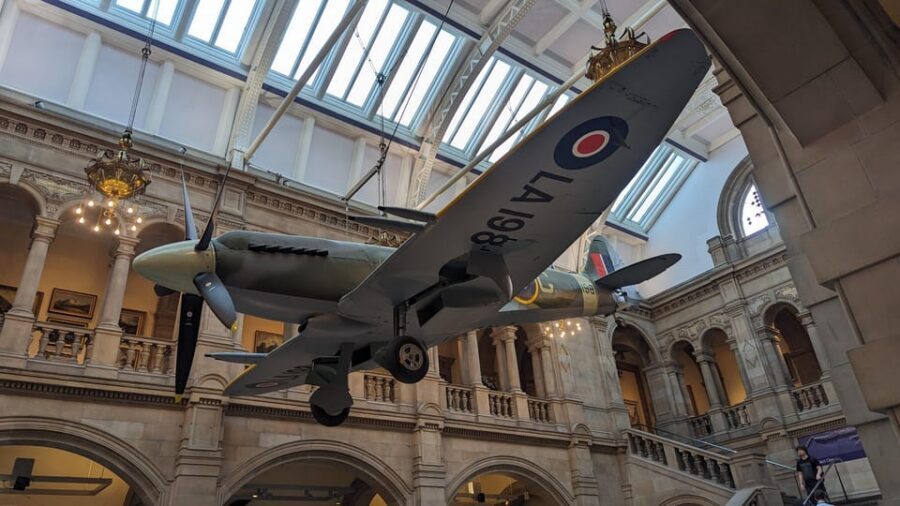
After that you’ll reach Kelvingrove Art Gallery and Museum, built in 1901 in the Spanish Baroque style. This museum is a great “mix” stop: you get multiple collections, plus a restored Spitfire plane from World War II. I like this museum because it doesn’t ask you to be a specialist. You can drift between art, artifacts, and the plane and still feel like you got something real.
You’ll have about 45 minutes here. That’s enough to make smart choices. If you try to see everything, you’ll end up stressed. Instead, aim for three things:
- one big gallery area you can get oriented in quickly,
- one standout collection you actually want,
- and the Spitfire (since it’s a clear highlight).
Transport Museum and Glenlee Tall Ship: A Smooth Finish by the Water
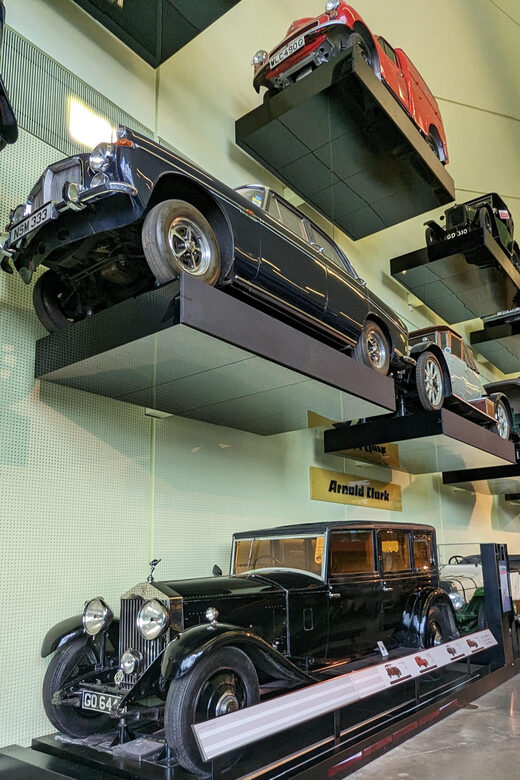
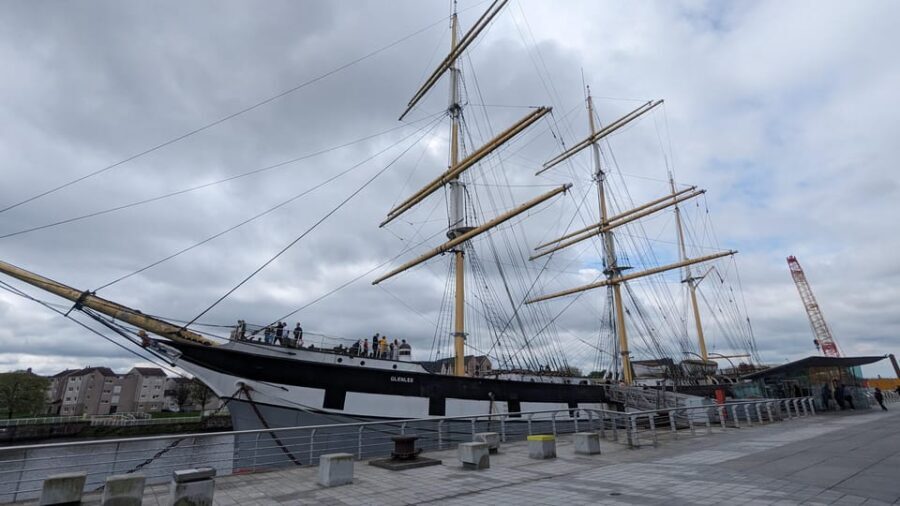
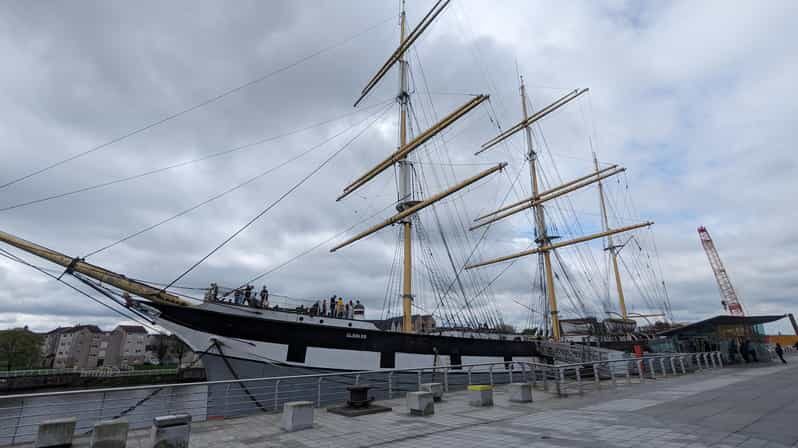
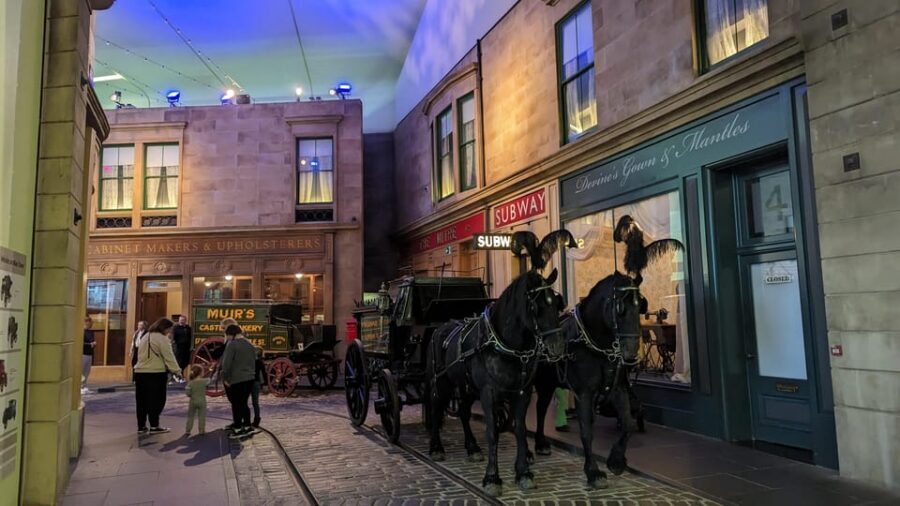
The tour ends with time in the Transport Museum and Glenlee Tall Ship, entry included, before you’re returned to your cruise ship. This is a smart way to finish because it shifts gears from buildings and stone to objects you can touch with your imagination—vehicles, tools, and a ship.
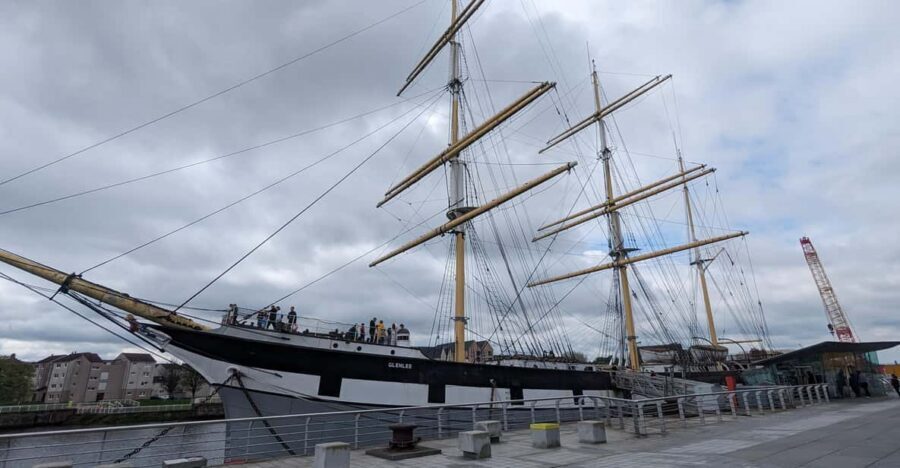
Glenlee Tall Ship is a good match for the kind of traveler who likes atmosphere and scale. Even if you’re not a hardcore maritime person, the ship adds motion to the day. The Transport Museum helps too: it’s a practical counterweight to the more symbolic stops earlier.
Time permitting, your guide will keep things moving. If you’re the kind of person who hates rushing at the end, you’ll want to save your energy for this section. It’s the last chance to soak things in before the ride back.
Time, Pace, and Choosing Optional Extras
This is an efficient day with short-but-real stops. You’ll have photo windows, guided time in places that benefit from a guide, and museum blocks that are long enough to enjoy but not long enough to get lost.
Here’s how to think about pacing:
- The cathedral and university stops reward slow looking, but the guided format keeps you on track.
- The Necropolis and Provand’s Lordship are your “interest-based” choices. If you love atmosphere, add the Necropolis. If you prefer straightforward structure, focus on the house and museum time.
- The big optional cost choices are Kelpies entry and the Falkirk Wheel boat ride. Those decide whether the day feels more like sightseeing or more like a show.
If you’re traveling with kids or older relatives, this balance is helpful. You can adjust your involvement without breaking the day.
Price and Value: What $807 Per Group Actually Buys
The price is $807 per group up to 4, for an 8-hour private tour. That can sound high until you do the math. If you’re a small group of two or three, you’re paying for transport, a live multilingual guide, entry to the Glasgow museums, plus water and Scottish snacks. That’s a lot bundled into one day—especially if you’re trying to hit the Kelpies, Falkirk Wheel, and multiple Glasgow icons without switching vehicles or organizing separate tickets.
What’s not included is also clear: meals aren’t covered, and the Kelpies entry and Falkirk Wheel boat ride are optional add-ons. So your true “out the door” budget depends on whether you treat those optional parts as must-dos.
To me, the value works best if you:
- want a guided day with fewer logistics,
- care about the big landmarks and the museum stops,
- and can share the cost in a private group setup.
Who This Tour Fits Best
This is a strong match for travelers who like variety in one day: modern sculpture, major engineering, medieval architecture, and museum time. If you only want one type of attraction—only castles, only art, only scenery—you might find the mix too much.
It also suits travelers who appreciate a guide who can adapt. People have praised specific guides like Joao Madeira, Corrine, and Simon for being friendly and flexible, and for making the day feel well-run rather than rushed. In a packed schedule, that human element matters.
Language support is also a plus. The guide can work in English, Portuguese, Spanish, French, Urdu, Punjabi, and Italian, which makes it easier to follow details without straining.
Should You Book This Glasgow, Kelpies, Falkirk Wheel Excursion?
If you want one organized day that hits the headline engineering (Falkirk Wheel), the major modern landmark (Kelpies), and a cluster of Glasgow’s best-known sights (cathedral, Necropolis area, museums, and university architecture), this tour makes sense.
Book it if:
- you’ll appreciate both outdoor icons and indoor museums,
- you want a private group day without moving parts,
- and you’re comfortable with a packed schedule.
Skip it (or consider a lighter plan) if:
- you hate short museum times and prefer slow, deep wandering,
- you’re sure you’ll skip most optional extras, and you want only the simplest sightseeing.
FAQ
How long is the Shore Excursion to Glasgow, Kelpies, and Falkirk Wheel?
It lasts 8 hours.
What’s included, and what costs extra?
Entry to museums in Glasgow is included, along with bottles of water and Scottish snacks. Meals are not included. Kelpies entry and the Falkirk Wheel boat ride are optional extras.
Where do pickups and drop-offs happen?
Pickup options include Stirling, Greenock, and Glasgow. Drop-off options include the same three locations.
What languages does the live guide speak?
The live guide is available in English, Portuguese, Spanish, French, Urdu, Punjabi, and Italian.
Is the tour wheelchair accessible?
Yes, the tour is wheelchair accessible.
Is free cancellation available?
Yes, you can cancel up to 24 hours in advance for a full refund.