REVIEW · GLASGOW
Glasgow Private Self-Guided Tour
Book on Viator →Operated by Pandemic Tours · Bookable on Viator
Glasgow is full of stories you can walk. This private self-guided route strings together some of the city’s most important landmarks, from Glasgow Cathedral to the mural walls around Merchant City, with audio guided by Alex. I like how the stops feel like a timeline you can follow on foot, not a checklist you rush through.
My second big win is the street-art focus, including murals tied to specific places like St Enoch and Smug pieces. One consideration: the tour runs through the Pandemic Tours app, and if the audio/map prompts don’t behave the way you expect, you may spend extra time checking your phone instead of just walking.
In This Review
- Key things that make this Glasgow self-guided tour worth your time
- Starting at Glasgow Cathedral: how to plan your 2–3 hour walk
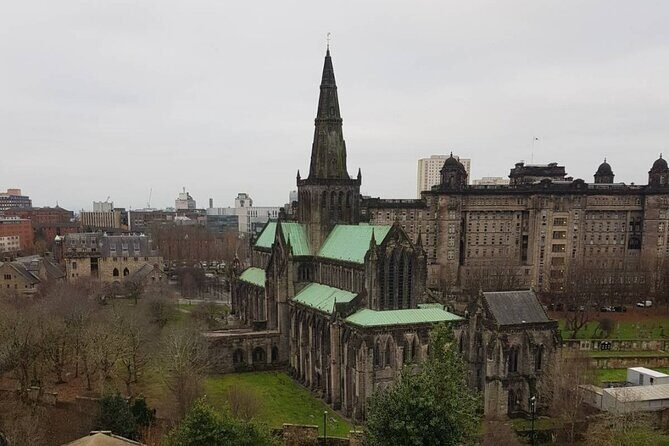
- Glasgow Cathedral: from a 1197 rebuild to a city emblem
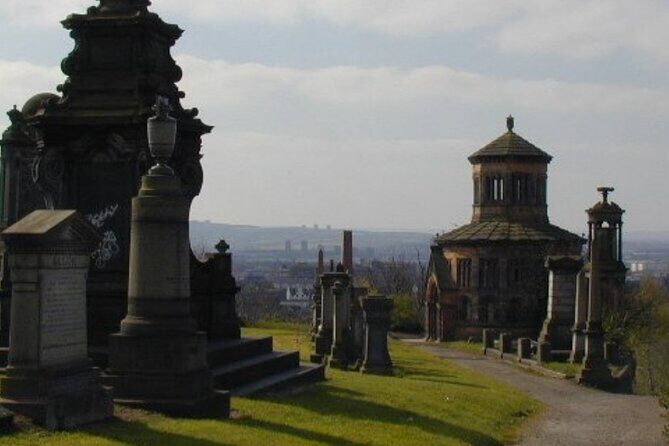
- The Glasgow Necropolis: 37 acres and status after dark
- Provand’s Lordship and the buildings that kept changing jobs
- University of Strathclyde and the mural trail you can photograph
- Tron Church tower, St Enoch stories, and Glasgow’s civic surprises
- Merchant City power moves: 98 Ingram St and the Mercury statue
- City Chambers, George Square, and why the city feels planned
- Buchanan Street, the Lighthouse, and the finishing loop to St Enoch
- Price and value: what $12.37 buys you
- Should you book this Glasgow Private Self-Guided Tour?
- FAQ
- How long is the Glasgow Private Self-Guided Tour?
- Where does the tour start and end?
- Is this a private tour?
- What language is the audio guide in?
- How do I access the tour content and audio?
- Are entrance fees included?
- Is the tour refundable or changeable?
Key things that make this Glasgow self-guided tour worth your time
- Glasgow Cathedral history comes with the 1197 rebuild story after the early fire, plus the long run of worship in one spot.
- The Necropolis is not just a cemetery; it’s 37 acres of status and design, shaped on Paris’s Père Lachaise.
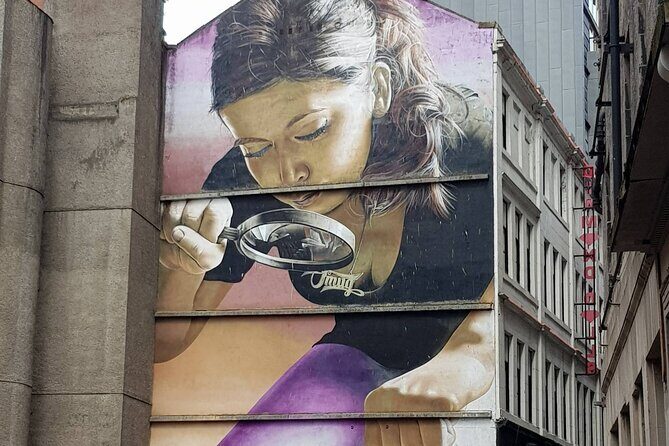
- Murals are built into the route, including Smug’s Fellow Residents of Glasgow and the photo-realistic Honey, I shrunk the Kids.
- Real Glasgow architecture and civic buildings are part of the walk, not only churches—think Tron Church tower and the former Town Clerk/Justice Court complex.
- You get an audio guide by Alex (not a computer voice), plus GPS directions and a stop-by-stop map in the app.
Starting at Glasgow Cathedral: how to plan your 2–3 hour walk
This is sold as a private self-guided activity, so it’s just your group on the route. Duration is listed as about 2 to 3 hours, but I’d treat that as a minimum for a steady walker who doesn’t linger. If you stop for photos, read side plaques, or take time for coffee, you can easily stretch it longer.
The tour starts at Glasgow Cathedral, Castle St, G4 0QZ, and ends near St Enoch Subway Station, G1 4BW. You’re covered by a GPS route and map in the Pandemic Tours app, plus an email telling you how to activate your tour (and yes, your booking reference isn’t the code).
Timing is also flexible. The posted hours are 12:00 AM to 11:30 PM daily during the service window shown, so you can pick a time that matches daylight and your energy level. The practical move is to start with daylight if you can, because Glasgow’s best stories are the ones you can actually see and read while you walk.
Other private Glasgow tours we've reviewed in Glasgow


Glasgow Cathedral: from a 1197 rebuild to a city emblem
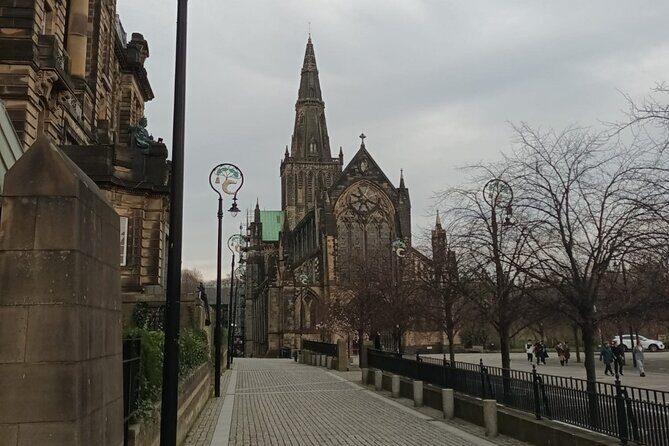
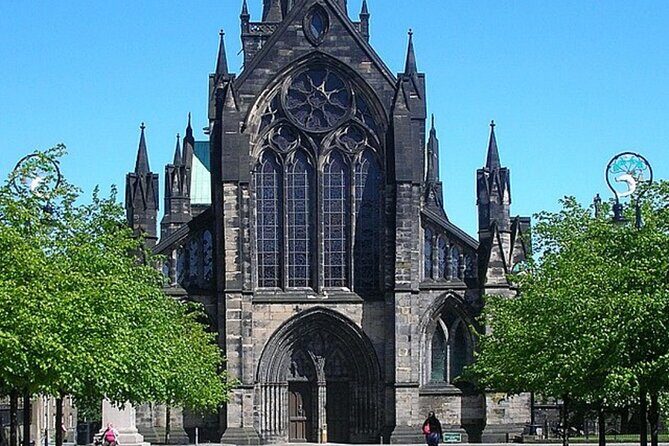
Glasgow Cathedral is the start for a reason. You’re not just looking at old stone—you’re stepping into a place whose story survived disaster. This version dates to 1197, after an earlier cathedral (built 1136) was damaged by fire. The tour explains that the cathedral has stayed roofed since then, and that worship has carried on for more than 800 years.
What I like about this stop is how it sets the tone for everything that follows. You’re learning Glasgow as a living city, where religious buildings, civic spaces, and later commercial areas all layer on top of each other. If you enjoy architecture, pause a bit longer than the typical stop time and scan the grounds and surroundings around the cathedral. Even on a short audio segment, the details make the rest of the route click.
Practical note: this stop is listed as 30 minutes and says admission is ticket free. Even so, the tour package itself doesn’t include entrance fees for attractions, so it’s smart to keep an eye on on-site signage in case local rules differ.
The Glasgow Necropolis: 37 acres and status after dark
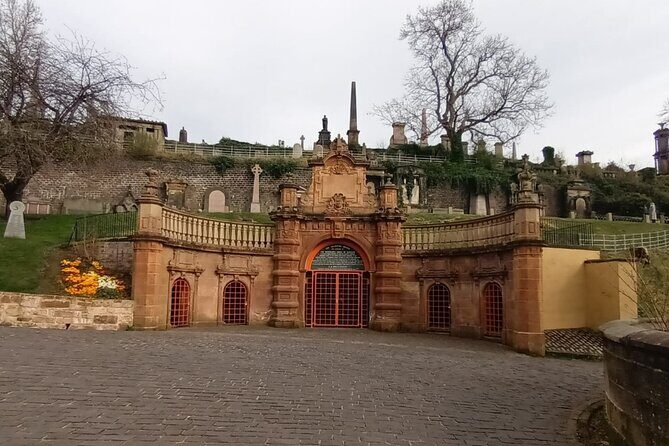
Next up is the Glasgow Necropolis, described as Glasgow’s most famous graveyard. It was established in 1831, modeled after Paris’s Père Lachaise, which matters because it shapes the whole feel of the place. This is not a plain burial ground. The tour frames it as a place where wealthy Glaswegians wanted an impressive statement even after death.
The scale is part of the story. The Necropolis stretches over 37 acres—the tour even translates that into around 15 soccer fields and about 150,000 m². That’s why it works so well for a self-guided walk: you can follow the route, take your time, and still feel like you covered a lot of ground.
This stop is listed at 15 minutes and also says ticket free. If you want more out of it, treat 15 minutes as a fast “walk-through” rather than a full cemetery study. Look for the way the design spreads out and the way it sits over the city. It’s one of those places where the views and the monuments both do the work.
Provand’s Lordship and the buildings that kept changing jobs
After the Necropolis, the route shifts from big history to a more “read the walls” kind of history. You’ll stop at a stone building known as Provand’s Lordship since the late nineteenth century, and you’ll hear that before the name stuck, it was called the Hospital of St Nicholas.
What makes this stop valuable is the way it reinforces Glasgow’s long habit of reusing buildings. It’s not only about what something was originally. It’s about how a city keeps adapting old structures for new purposes. Even if you only get a few minutes here, the audio context helps you see it as part of a much bigger story.
The route also includes another architectural time-jump: a building where the first official record is from 1626, tied to an earlier timeline that the tour places as far back as the fifteenth century. You’re told it served as the Town Clerk’s office, then a Justice Court, then the Town Council, and later—because of security—jail at the top. That sequence turns a single structure into a condensed civic history.
If you’re the type who likes to connect places to the roles they played in daily life, this is one of the strongest stretches of the route. The only drawback is that the stops are brief by design, so you’ll get the story more than the deep architectural “wander.” Still, the payoff is you’ll know what you’re looking at.
University of Strathclyde and the mural trail you can photograph
One of the most enjoyable parts of this tour is that it doesn’t treat murals as random street decoration. It threads them into specific locations and turns them into a guided theme.
You’ll pass University of Strathclyde, noted as one of Glasgow’s three major universities. The tour pairs the architecture with mural spotting, so even a short stop becomes a “what to notice” moment instead of a stop you might ignore.
Then the route points you to a specific mural moment: St Enoch cradling St Mungo. The description emphasizes that the mural shows St Mungo in a futuristic take, with a mother holding a baby. If you like art that mixes religious story and modern style, this one is easy to enjoy even with limited time.
The tour also includes multiple Smug murals. One stop calls out Fellow Residents of Glasgow, painted by Smug, featuring a hiker foraging for mushrooms in woodlands. The tour notes a clever detail: animals appear through what looks like holes in the wall. That’s the kind of mural you’ll want to photograph from the right angle, and you’ll be glad the route makes time for it.
The final mural stop is Honey, I shrunk the Kids, another Smug piece described as photo-realistic street art. Ending with murals works well because it closes the loop: medieval cathedral stories at the start, then living city art at the finish.
Tip for your photos: keep your phone volume sensible but also keep your camera ready. Murals get better when you look first, then frame. If you keep switching between audio and map constantly, slow down your walking so you don’t miss the composition.
Other guided tours in Glasgow




Tron Church tower, St Enoch stories, and Glasgow’s civic surprises
The route also mixes churches with civic and cultural landmarks in a way that feels like a real city stroll. One highlight is the tower of Tron Church, which today is the Tron Theatre. The street is called Trongate, and the tour explains that it was originally known as Saint Thenew’s Gait, tied to a supposed burial site connected to Saint Enoch (Thenew is mentioned as how the name relates).
This stop is memorable because it shows how Glasgow’s religious legends shaped street names and local identity. You don’t need a long explanation to feel the connection; the audio does the linking work so you don’t just walk past a theater tower without context.
Another memorable stop is a police history museum section. The tour describes Glasgow as having had the first police force in Great Britain, and you’ll see history from 1800 to 1975. Even with a short time slot, it gives you a different angle on the city—law and order as part of Glasgow’s modern identity.
If you’re a fan of museums but don’t want to commit to a full session, this is the best style of stop: a focused slice of history you can take in during a walk.
Merchant City power moves: 98 Ingram St and the Mercury statue
As the route heads deeper into Merchant City, the details get more specific and more fun.
At 98 Ingram St, the tour describes a church originally built in 1824, replacing an older version. The architect is given as Thomas Rickman in the Gothic revival style. The graveyard includes graves of tobacco merchants Andrew Buchanan and John Glassford. The tour also connects the site to the older Ramshorn cemetery, now partly covered by Ingram Street, and explains that it was the fashionable, expensive burial spot in the eighteenth century before the Necropolis became the newer place to be buried.
This is the kind of history that rewards slow looking. If you care about how money and industry built the city, the tobacco merchant connection makes sense of why some buildings and burial grounds look the way they do.
Next, you’ll see a statue of Mercury, the Roman god tied to financial gain, commerce, and other traits connected to travel and trickery. The tour notes Mercury stands on a marble plinth and that it is one of two sculptures by Alexander Sandy Stoddart. Importantly, it also ties the statues to the Italian quarter of Merchant City. That’s a nice example of how public art points you toward past communities.
City Chambers, George Square, and why the city feels planned
The walk then opens up into big civic spaces. You’ll pass the City Chambers, completed in 1888 and inaugurated by Queen Victoria, who is honored with a statue at the opposite end of George Square. The tour also says the building was used as the registry office in a famous series set in London—so you get a pop-culture connection alongside the architecture.
Then comes George Square itself. The tour explains it was named after King George III and laid out as early as 1781 as part of a Georgian plan to create a grid-style city center. Development waited another 20 years, which helps you understand how Glasgow’s growth didn’t happen in one neat moment.
If you’re trying to feel the city’s layout, this part is useful. It’s not only about seeing landmarks; it’s about learning how streets and squares connect. Even if you don’t stop long, you’ll come away with a better mental map for where you’ll want to go next on your own.
Buchanan Street, the Lighthouse, and the finishing loop to St Enoch
By the time you reach Buchanan Street, the tour is clearly telling you you’ve moved into the twenty-first century. The audio frames the shift: you’ve gone from medieval religious life to tobacco-era wealth and later city energy, then back into modern Glasgow’s center.
The route includes a stop by the Lighthouse, described as a visitor centre, exhibition space, and event venue in the heart of the city. Even if you don’t enter (since entrances aren’t included), it’s a solid visual marker for where you are in the city today.
The route also includes the final Smug mural and then the finishing move near St Enoch Subway Station, described as close to the Roman Fort. That ending choice matters. St Enoch is a practical transit point, so you’re not left stranded at the edge of nowhere after a walk.
Price and value: what $12.37 buys you
The price listed is $12.37 per person, which is very low for a route that includes GPS directions, a mapped stop sequence, and a narration track by Alex. The tour also gives you 3 weeks of unlimited access on the app, which is a rare perk for self-guided products. That means you can replay parts if you want another look at a mural or a building detail you rushed past.
You also get more than just a voice track. The included info includes audio guide, videos, pictures, recommendations, and all the info you need inside the app. That helps turn a short walking route into something closer to an on-foot mini lesson.
Here’s the fair warning side: because it’s self-guided, you’re responsible for keeping your device on track. If your phone battery is weak, or if the app prompts don’t start automatically, you’ll feel it in the experience. This is why I recommend doing a quick check before you walk: start the audio, confirm the next stop loads, and keep the app handy.
Should you book this Glasgow Private Self-Guided Tour?
Book it if you want a low-cost way to see Glasgow’s key contrasts in one go: Cathedral history, Necropolis scale, civic architecture, and murals by Smug. It’s also a good match if you like setting your own pace and enjoy walking without coordinating with a live group.
Skip it (or at least plan carefully) if you know you get frustrated by app-based navigation or you need very smooth audio playback to enjoy a tour. This is still a strong route, but it asks you to be patient with your phone.
If you’re in town for only a short visit or you want an easy “first Glasgow day” that leaves you with ideas for future stops, this one makes sense.
FAQ
How long is the Glasgow Private Self-Guided Tour?
The tour is listed as about 2 to 3 hours.
Where does the tour start and end?
It starts at Glasgow Cathedral on Castle St (G4 0QZ) and ends at St Enoch Subway Station (G1 4BW) near the Roman Fort.
Is this a private tour?
Yes. It’s a private activity, and only your group participates.
What language is the audio guide in?
The experience is offered in English.
How do I access the tour content and audio?
You need to download the Pandemic Tours app. After booking, you’ll receive an email with instructions to activate your tour. You get map, directions, GPS route, and stop information inside the app, with an audio guide led by Alex.
Are entrance fees included?
Entrance fees are not included. The stop descriptions list some stops as ticket free, but the tour package itself doesn’t include entrance costs for attractions.
Is the tour refundable or changeable?
No. The experience is non-refundable and cannot be changed for any reason.