REVIEW · GLASGOW
2.5 Hour Football Walking Tour in Glasgow
Book on Viator →Operated by Glasgow Football Tour · Bookable on Viator
Footsteps across Scottish football’s original template. This 2.5-hour Glasgow walking tour takes you through the places tied to the modern passing and running game and shows how they shaped grounds worldwide. I love how the story stays grounded in real sites, from Queens Park to Hampden Park’s three eras.
The best part for me is the mural stop details—like the 1st Hampden Mural linked to Scotland 5-1 England on 11 March 1882—because it turns football trivia into something you can actually see on a wall. One thing to plan for: the tour requires good weather, so you’ll want layers and a backup mindset if conditions change.
In This Review
- Key highlights you’ll get from this Hampden walk
- Glasgow’s football roots: what this walk is really about
- Getting started at 16 Queen’s Dr: your “easy win” meeting spot
- Stop 1: Queens Park Recreation Ground and the passing-and-running idea
- Stop 2: The Hampden Bowling Club site and the 1882 Scotland mural
- Stop 3: Cathkin Park and the lesson of abandoned terracing
- Stop 4: Hampden Park, Rose Reilly mural, and the big finish
- Price and value: what $33.94 buys you in Glasgow
- How to make the most of a 2.5-hour football walk
- Who should book this Hampden Park walking tour
- Should you book this Glasgow football walking tour?
- FAQ
- How long is the 2.5-hour football walking tour in Glasgow?
- Where do I meet, and where does the tour end?
- What time does the tour start?
- Is the tour offered in English?
- Do I need an admission ticket?
- What if the weather is poor?
- Can I cancel and get a full refund?
Key highlights you’ll get from this Hampden walk
- Three Hampden parks in one route and how each one fits into the game’s evolution
- Queens Park Recreation Ground as part of the cradle of modern football style
- The 1882 Scotland vs England mural connection that makes early international football feel tangible
- Cathkin Park ruins and original terracing that explain what stadium life looked like when things didn’t last
- A final finish at Hampden Park so you end where the legend lives
Glasgow’s football roots: what this walk is really about
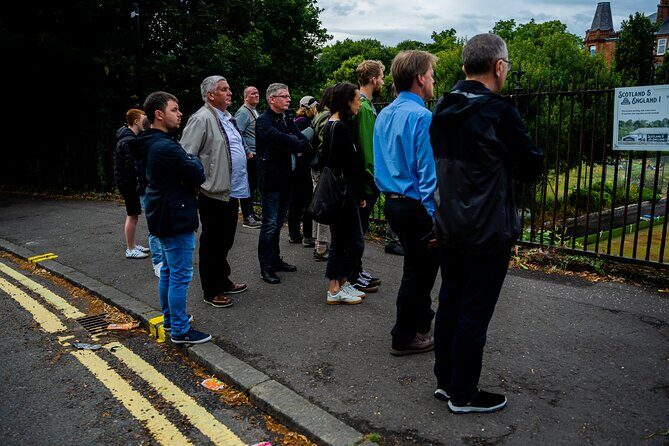
This isn’t a speed tour of big stadium facts. It’s a story walk that uses four stops to explain how football’s look and feel became what you recognize today. The tour’s premise is specific: the Queens Park Recreation Ground plus the three Hampden Parks helped form the style of play Scots developed over centuries—now followed by billions around the world.
When the guide keeps connecting the football to the physical places, the walking pace makes sense. You’re not just checking off addresses. You’re building a mental map of why these grounds mattered, how they changed, and why some ideas survived while others faded.
You’ll also notice the tone is part educational, part emotional. The tour description promises entertaining and sometimes heartbreaking stories, and the structure supports that. You move from a foundational “cradle” site to places that show ambition, then to an abandoned stadium that puts the passage of time in your face.
Other Glasgow city walking tours we've reviewed in Glasgow



Getting started at 16 Queen’s Dr: your “easy win” meeting spot
Your morning begins at 16 Queen’s Dr, Glasgow G42 8BS. The start time is 10:30 am, and the meeting spot is close to public transportation, which matters because it keeps the day simple. You’re not stuck hunting for parking, and you won’t need a private driver to get oriented.
This start location also gives you a good rhythm: you’re set up for a steady walk rather than awkward detours. If you like tours where the first 15 minutes don’t feel chaotic, this one fits that preference.
One practical note: since the tour ends at Hampden Park, you’ll want to plan your transport after the walk around that finish point. That way you’re not spending your energy backtracking.
Stop 1: Queens Park Recreation Ground and the passing-and-running idea
The first stop centers on the idea that this area is part of football’s “cradle” for the modern passing and running game. The tour frames it as a Scots-developed style that grew over centuries and later became a global standard.
What you’ll like here is how the ground isn’t treated like a random football field. The tour uses Queens Park Recreation Ground as the first piece in a bigger puzzle: football as a game of movement and momentum, not only set-piece moments. Even if you’re not a tactical nerd, the guide’s storytelling turns the concept into something you can picture—how players and crowds once experienced football, and why those early ideas had long-term impact.
A small consideration: because the focus is conceptual (style of play and ground design influence), this opening stop works best if you pay attention for the first ten minutes. If you show up half listening, you may miss the thread the guide keeps tying to later Hampden eras.
Stop 2: The Hampden Bowling Club site and the 1882 Scotland mural
Next you’ll visit the Hampden Bowling Club, described as the first Hampden park location. This stop is special because the story doesn’t stay abstract. It anchors itself in a specific historical marker: the 1st Hampden Mural connected to Scotland 5-1 England on 11 March 1882.
That mural detail is the kind of thing that makes a football tour click. Instead of relying on memory for numbers, you get a concrete date and score tied to a place. It’s a reminder that football history wasn’t invented in stadiums that look exactly like today. It happened in evolving venues, with communities building what they could and then upgrading when the game demanded it.
If you’re into football culture, you’ll probably find yourself looking at the surrounding context too—how local sport and local identity mix. Even if you don’t know every name from that era, the score and date give you an instant handle.
Stop 3: Cathkin Park and the lesson of abandoned terracing
The third stop brings you to Cathkin Park, identified as the second Hampden park. Here the tour shifts from famous and tidy to real and worn: it’s an abandoned stadium with original terracing.
I like stops like this because they keep football history honest. Not every ground becomes a worldwide icon, and not every facility gets preserved. Cathkin Park’s abandoned state works like a visual footnote to ambition—what gets built, what lasts, and what the game outgrows.
This is also a good moment to slow down mentally. The tour’s description suggests the guide includes revolutionary and heartbreak stories, and this part of the route is where that mood tends to fit. You’re not just learning how football evolved. You’re seeing how time can erase even major sporting stages.
If you’re expecting a modern facility experience at every stop, adjust your expectations here. This is more about meaning than amenities.






Stop 4: Hampden Park, Rose Reilly mural, and the big finish
The walk culminates at Hampden Park. This is labeled as the third Hampden park, and the tour highlights the Rose Reilly mural as part of what you’ll encounter along the way.
Finishing at Hampden Park matters. It lets you end with a sense of place rather than a half-finished story. If you start with the “cradle” idea, then move through first and second Hampden sites, you want a final stop that feels like the central chapter. Hampden Park is built for that.
The mural focus also helps at this final stage. It gives you a local, artistic way to connect the football narrative to a Glasgow setting, so the experience doesn’t feel like a list of match facts. It feels like culture, not only sport.
As for timing: the tour is listed at 2 hours 30 minutes (approx.), and it says you’ll be with the group for about 2 hours. That extra time likely covers the walk between stops and the natural pauses for the guide’s storytelling.
Price and value: what $33.94 buys you in Glasgow
At $33.94 per person, this tour sits in a reasonable range for a guided walking experience that visits multiple sites tied to the game’s development. The value comes from three things you don’t get from a casual self-guided stroll.
First, you’re paying for a local guide who tells the story. The tour description promises experienced, entertaining storytelling, and the overall structure is built around narrative flow—cradle to first to second to third.
Second, the route is efficient. You cover several key Hampden-area locations in one go, rather than scattering your time across the city and hoping you’ll find the right points of interest.
Third, the stop details are specific enough to feel real. The 1882 Scotland 5-1 England mural reference is a great example: it’s not generic football talk, and it gives you a fact you can remember because it’s tied to a physical marker.
One caution on value: the tour says admission ticket not included. That means if any stop requires entry fees for something beyond what’s visible from the outside, you’d need to handle that separately. If you want zero extra spending, check what you’ll be able to see during the walk versus what might be ticketed.
How to make the most of a 2.5-hour football walk
This is a walking tour, so your comfort matters. Wear shoes you trust for uneven ground and curb edges, especially if the weather turns damp. The tour requires good weather, so you’ll likely avoid severe conditions—but Scotland spring-to-fall can still surprise you.
Also, plan your day around the fact you’re on a schedule with a set start time of 10:30 am. If you’re late, you’re likely missing the opening context. Football history tours get better when the guide can build a thread from stop to stop.
The group size is capped at 20 travelers, which is a plus if you prefer questions and conversation without feeling like you’re in a massive crowd. It also usually keeps the pace manageable.
Finally, because the tour uses a mobile ticket, make sure your phone battery is healthy. You’ll want to present it at check-in without digging through folders.
Who should book this Hampden Park walking tour
You’ll be a good match if you want football history that’s tied to places, not just dates and trophies. This is especially great for fans who care about how the game became what it is today—style of play, ground development, and why certain formats spread.
It’s also a smart choice if you’re short on time in Glasgow. You get multiple Hampden-era stops without needing to plan separate outings.
If you’re traveling only for modern stadium amenities or big interior access, you might find it less satisfying. The tour’s heart is the story and the sites around it, including an abandoned ground where the atmosphere is historical rather than polished.
Should you book this Glasgow football walking tour?
Yes, if you like guided storytelling that connects football to real Glasgow locations and you can walk comfortably in good weather. The $33.94 price feels fair for a small-group tour with multiple specific stops, including mural details like the 11 March 1882 Scotland 5-1 England reference and the Rose Reilly mural finish.
If you’re only interested in ticketed stadium entry or prefer to avoid walking tours, you may want to look for another option. But if you want a memorable Glasgow morning built around football’s roots, this Hampden walk is a strong bet.
FAQ
How long is the 2.5-hour football walking tour in Glasgow?
The tour runs for approximately 2 hours 30 minutes, with about 2 hours spent with the group during the tour.
Where do I meet, and where does the tour end?
You meet at 16 Queen’s Dr, Glasgow G42 8BS, UK. The tour ends at Hampden Park on Letherby Dr, Glasgow G42 9BA, UK.
What time does the tour start?
The start time is 10:30 am.
Is the tour offered in English?
Yes, the tour is offered in English.
Do I need an admission ticket?
An admission ticket is not included. The tour is listed as not including admission.
What if the weather is poor?
This experience requires good weather. If it’s canceled due to poor weather, you’ll be offered a different date or a full refund.
Can I cancel and get a full refund?
Yes. You can cancel up to 24 hours in advance for a full refund. If you cancel less than 24 hours before the start time, the amount paid won’t be refunded.